

The best time to replace a furnace in Fairfax is a week when you don’t need it, and September is exactly that week. Installers have open calendars, nobody’s making decisions in a cold house at 10 p.m., and you have time to get the details right. And the details are the whole game: a furnace is a 15-to-20-year appliance, and the quality of the installation decides which end of that range you get. Here’s what a proper install includes, and how to tell before signing whether you’re getting one.
Before you book a single appointment, get the range yourself. The furnace and AC cost estimator turns a few questions about your home into a price band with monthly payment options, so you walk into every quote already knowing the neighborhood.
First: are you sure it’s replacement time?
If the furnace is under 12 years old and the repair is a specific, priced part, repair usually wins. Past 15 years, with a cracked heat exchanger or a repair bill climbing toward a third of replacement cost, the math flips. We wrote a full repair-vs-replace framework and a rundown of the warning signs a furnace gives before it fails. And if someone has already handed you a big replacement quote and something about it feels fast, bring it to us for a free second opinion. If the quote is right, we’ll tell you that too.
What a proper furnace installation includes
- A load calculation, not a guess. The right furnace is sized from your house’s actual heat loss: insulation, windows, air leakage, square footage. “Same size as the old one” ignores 20 years of changes to the house and the fact that the old one may have been wrong on day one. Oversized furnaces short cycle, heat unevenly, and wear out early.
- A permit and an inspection. Fairfax County requires a mechanical permit for a furnace replacement, and gas work is inspected. Your contractor should pull the permit and meet the inspector as part of the job. An installer who suggests skipping the permit is telling you how they handle everything else you can’t see.
- Venting done for the furnace you’re buying, not the one leaving. An 80% furnace vents up the flue; a high-efficiency condensing furnace vents in PVC out the side wall and drains condensate. Swapping between them changes the venting, the chimney liner situation, and the drain plan, and each of those has a code-correct answer.
- Gas pressure and combustion set to spec. Commissioning is the difference between “it runs” and “it runs right”: measuring gas pressure, temperature rise, and static pressure, and adjusting to the manufacturer’s numbers. This is the step the lowest bid skips.
- The small parts that protect the big one. A properly sized filter rack, a condensate path that can’t flood the burner compartment, sealed duct connections at the plenum, and a warranty registered in your name with the paperwork in your hand.
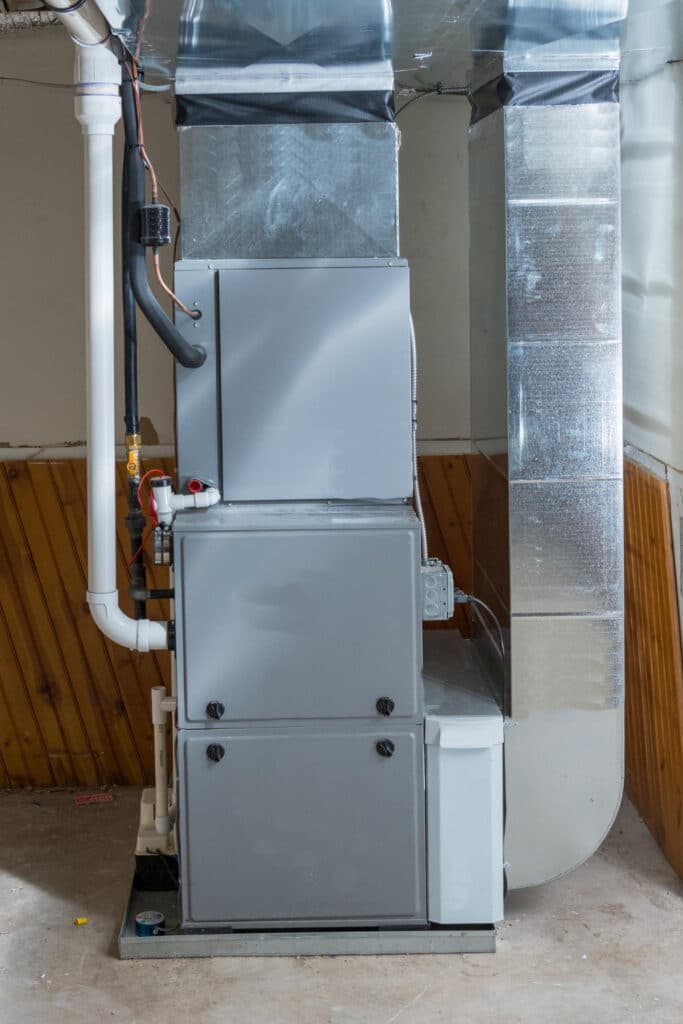
80% or high-efficiency?
An 80 AFUE furnace turns 80 cents of every gas dollar into heat; a condensing furnace turns 95-plus cents. High efficiency costs more up front and the venting change adds work, so the payback depends on your gas usage and how long you’ll own the house. In a Fairfax winter the fuel savings are real but not dramatic, so the honest answer is situational: long stay and an easy venting path favor high-efficiency, while a short horizon or an awkward flue conversion can make a quality 80% furnace the smarter check to write. Beware of anyone whose answer doesn’t start with questions about your house.
Worth a conversation: the heat pump option
Northern Virginia winters are mild enough that modern heat pumps, alone or paired with a gas furnace as a dual-fuel system, are a legitimate alternative worth pricing when the furnace is already being replaced. It’s not the right answer for every house, but replacement day is the cheapest moment you’ll ever have to consider it, because the labor is already on the calendar.
Questions that sort your installer in five minutes
- Will you do a load calculation, and can I see it?
- Who pulls the Fairfax County permit, and is the inspection included?
- What does commissioning include, and do I get the measured numbers?
- Is the quote a complete scope in writing: venting, condensate, filter rack, haul-away, permit?
- Who registers the warranty, and when do I get confirmation?
A good installer answers all five without flinching, because this is just their normal job. Vague answers now become your problems in February.

Questions Fairfax homeowners ask us
How long does a furnace installation take?
Most straight replacements are one day: old unit out in the morning, new one commissioned by evening. Venting conversions or duct modifications can add a second day.
Do I really need a permit for a furnace replacement in Fairfax County?
Yes. The county requires a mechanical permit for equipment replacement, and your contractor should handle it as part of the job. The permit protects you: it means a county inspector checks the gas and venting work on the appliance that burns fuel inside your house.
When is the best time to replace a furnace?
Fall shoulder season, before the first cold snap. You get schedule flexibility, time to compare quotes, and a calm decision instead of an emergency one.
How long will the new furnace last?
A quality furnace, installed to spec and maintained annually, typically runs 15 to 20 years. Skipped maintenance and sloppy installation are what produce the 10-year furnace.
The bottom line
Buy a good furnace, but interview for a good installation, because that’s the product you’ll live with for two decades. If your furnace limped through last winter, get ahead of this one: call (703) 997-9757 or book online for a free in-home estimate, and we’ll size it, quote the full scope in writing, and answer all five questions before you ask.