

Great Falls breaks the pattern of every other town we serve, in three ways that all point the same direction: the houses are large, most addresses run more than one heating system, and a meaningful share are not on natural gas at all.
If you are here, the first question a competent contractor should ask is what fuel you burn, and the second is how many systems you have. Get either wrong and the quote is meaningless.
What is actually in these houses
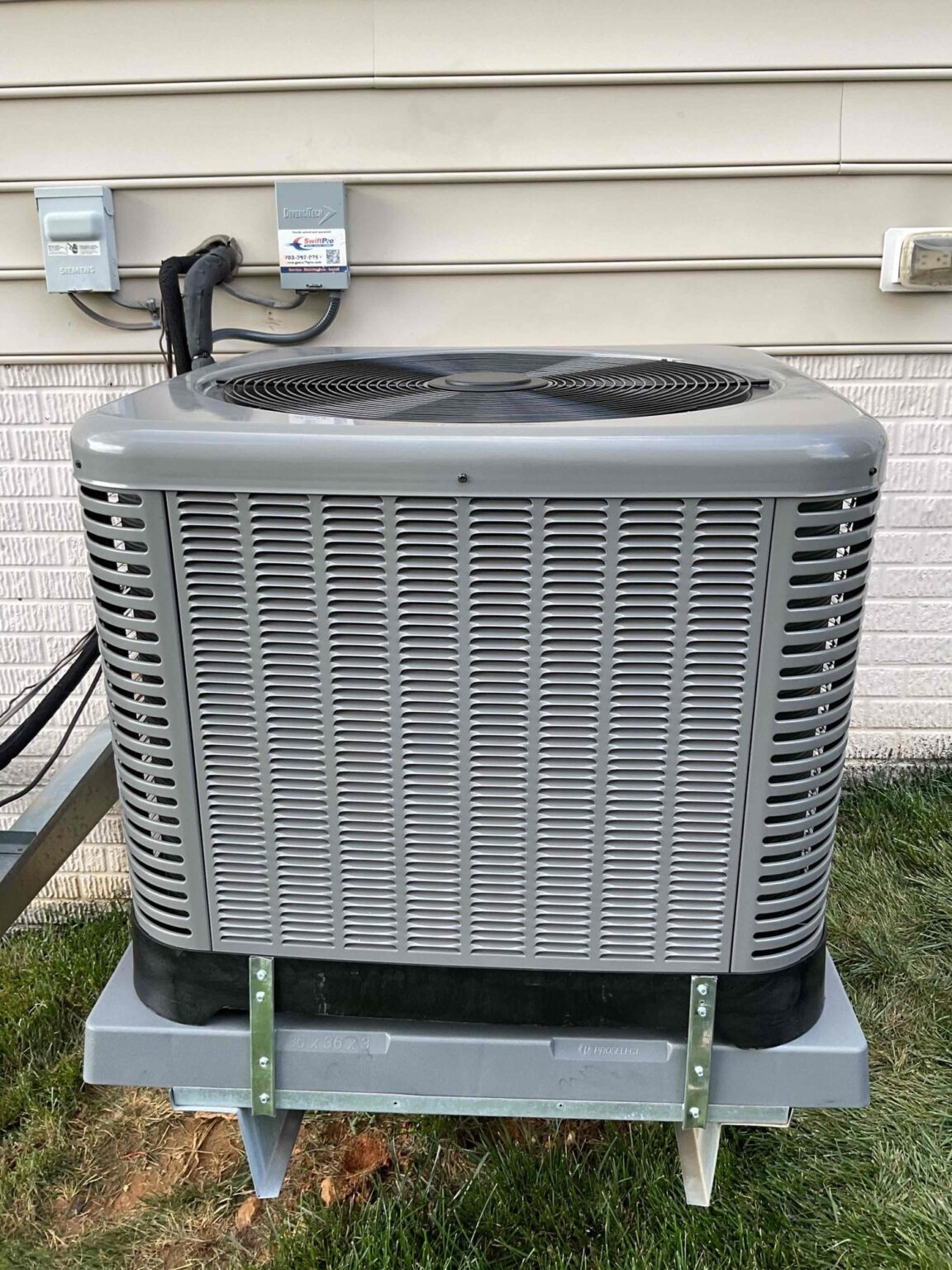
Two, three, sometimes four systems. A main floor system, an upstairs system, often a separate one for a finished basement, a pool house, or a wing added later. Zoned. Multiple thermostats, multiple filters, and several things that can fail independently and quietly.
Propane, in a good number of houses. Natural gas service does not reach every road out here, and where it does not, the house runs on a propane tank, on oil, or all-electric with a heat pump. If you have a tank in the yard, your furnace is a propane furnace, your fuel price moves with your supplier rather than a utility tariff, and the rebate programs that apply to natural gas customers do not apply to you.
Heat pumps on the all-electric properties, frequently paired with propane or electric backup heat.
Boilers in some of the older and larger houses, with radiators or radiant floor loops.
The failure nobody notices until January
In a three or four system house, a system that serves a guest wing, a bonus room over a garage, or a finished basement can be dead for weeks and nobody knows. The first cold night is when you find out, and the first cold night is also when every other house in the county is calling.
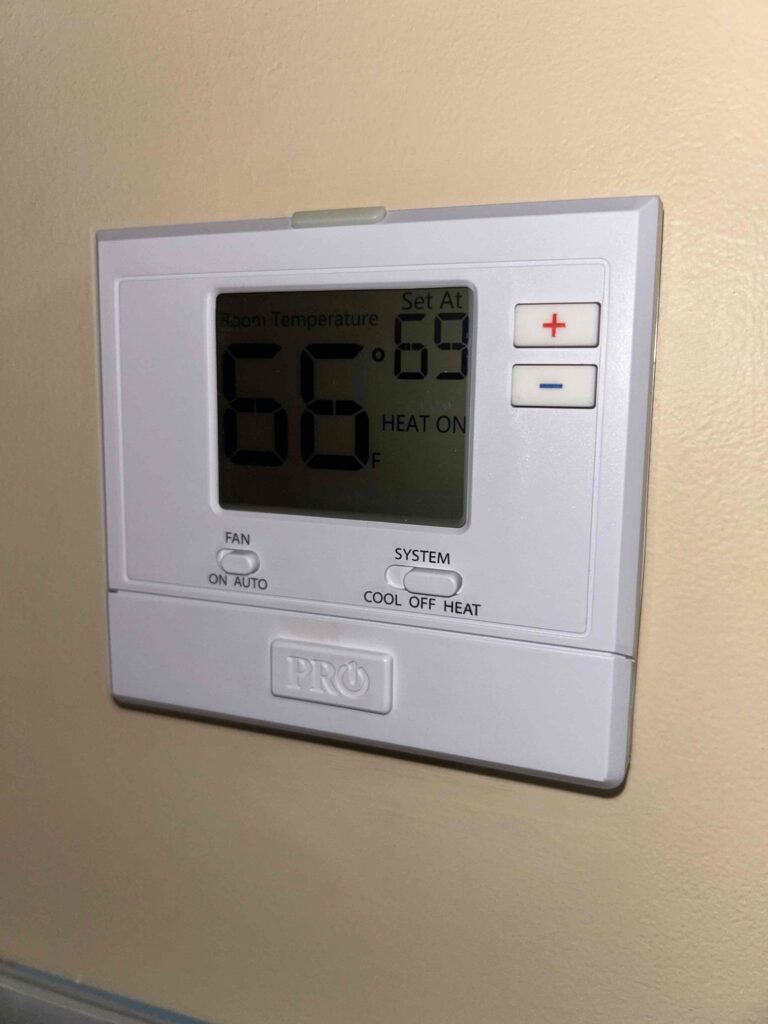
So the single most useful thing on this page: in October, run every system, not just the one you live under. Set each thermostat to heat, push it up a few degrees, and confirm warm air actually arrives. It takes twenty minutes and it moves a January emergency into a Tuesday appointment.
What goes wrong, and what it costs
It lights, runs a few seconds, shuts off, tries again. Flame sensor, $95 to $180 to clean. Our most common no-heat call anywhere, propane or natural gas.
Clicking with no flame. Hot surface igniter, $240 to $410.
One zone warm, one cold on the same system. A zone damper or its motor, not the furnace. Frequent in zoned houses and a modest repair.
Runs and shuts down after fifteen minutes. Overheating on restricted airflow. Filter, then the blower wheel at $300 to $440. In a house with long duct runs this shows up sooner than it would in a rambler.
Water stain on a ceiling under an attic air handler. Condensate drain, $175 to $420, and cheap against the plaster it saves.
Heat pump iced over and staying that way. Defrost board most often, $450 to $1,150. Emergency Heat and call.
One cold radiator or clanking. Air in the loop. Bleed it. Routine, not a dying boiler.
- Diagnostic visit: about $99.
- Flame sensor cleaned $95 to $180; igniter or sensor replaced $240 to $410.
- Condensate drain or trap $175 to $420. Thermostat $300 to $640.
- Blower wheel cleaned $300 to $440. Blower motor $670 to $2,400.
- Control board $550 to $1,180. Inducer motor about $1,950.
- Heat pump defrost board $450 to $1,150.
Our prices do not change because of the zip code. What changes your annual total is the count: four systems means four filters, four tune-ups and four things that can fail, even when every visit is ordinary.
If you are on propane
Two things worth knowing. A propane furnace is the same machine as a natural gas furnace with different orifices and a different gas pressure setting, so any competent technician can service it, and a conversion between the two is a real job rather than a swap of parts.
And the rebate landscape is different. Washington Gas pays $500 to $700 toward a high efficiency furnace, but that is for its natural gas customers. If you are on propane, that money is not available to you, which changes the payback math on stepping up in efficiency. It can still be worth it, because propane is usually more expensive per unit of heat than natural gas, so the efficiency gain is worth more per year. Ask for both tiers priced and run the numbers on your own fuel cost rather than a generic one.
Replacing, in a house with several systems
Replace by system, not by house, unless the equipment all went in the same week. There is no saving in replacing a seven year old upstairs unit because the main floor one failed at eighteen.
Size each one for what it serves now. Additions, finished basements and new windows all change the load, and in larger houses we very often find a system a full size bigger than the space needs, which is why it short cycles and why one room is never right.
A furnace alone runs $4,498 to $12,300 installed; a furnace and air conditioner together $8,898 to $23,000 by system size. Quotes out here tend toward the upper half of those ranges, because the houses are larger, the duct runs are longer and the equipment is bigger. The estimator prices it by system size in about two minutes. For a pool house, a converted attic, or a wing that has never been comfortable, the ductless estimator is usually the more honest tool.

October list
Run every system. Change every filter. If you have a propane tank, check the level before the first cold week rather than after it. Clear leaves from around and under any heat pump outdoor unit, since it drains defrost water out the bottom. And put a carbon monoxide alarm on every sleeping floor: Virginia requires them in new construction with fuel burning appliances and has no retrofit rule.
SwiftPro services furnaces, heat pumps and boilers across Great Falls. Call (703) 997-9757, book online, or start at the Fairfax County heating repair page.