
The short answer
On most gas water heaters in Northern Virginia, relighting the pilot takes about five minutes: turn the gas knob to OFF and wait, turn it to PILOT, hold it down while you click the igniter, keep holding for 30 to 60 seconds after the flame catches, then turn it to ON. The exact steps are printed on the label on your tank, and that label wins over anything you read online. If you smell gas at any point, stop and get out of the house.
Before you start: three checks
- Smell first. Natural gas has a rotten-egg smell added to it. Propane is heavier than air and sinks, so put your nose near the floor by the tank too. If you smell gas, don’t relight anything, don’t flip a light switch, and call your gas company or 911 from outside. On propane, call your supplier.
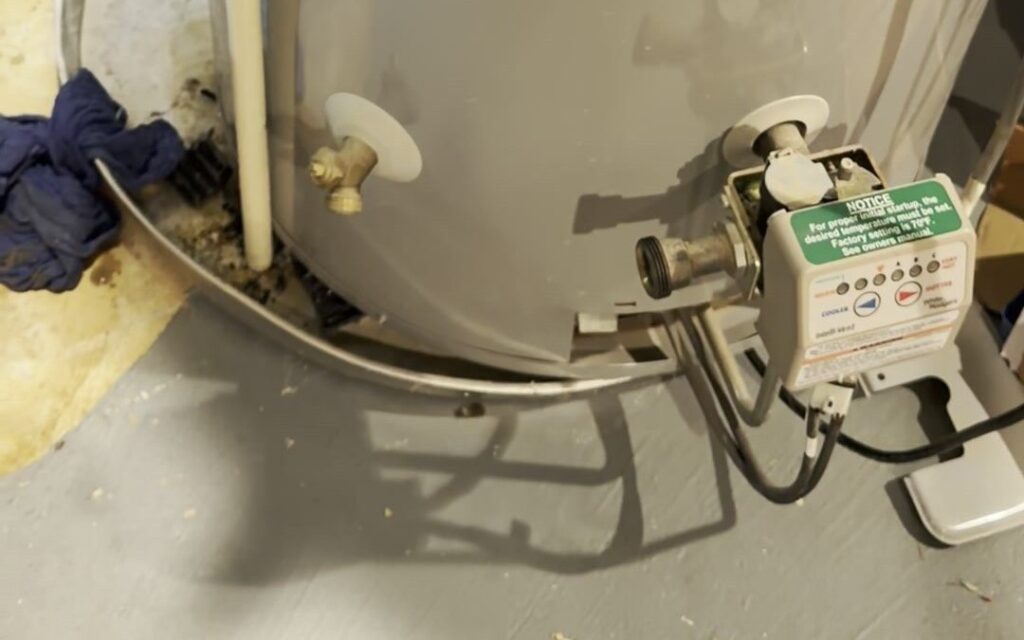
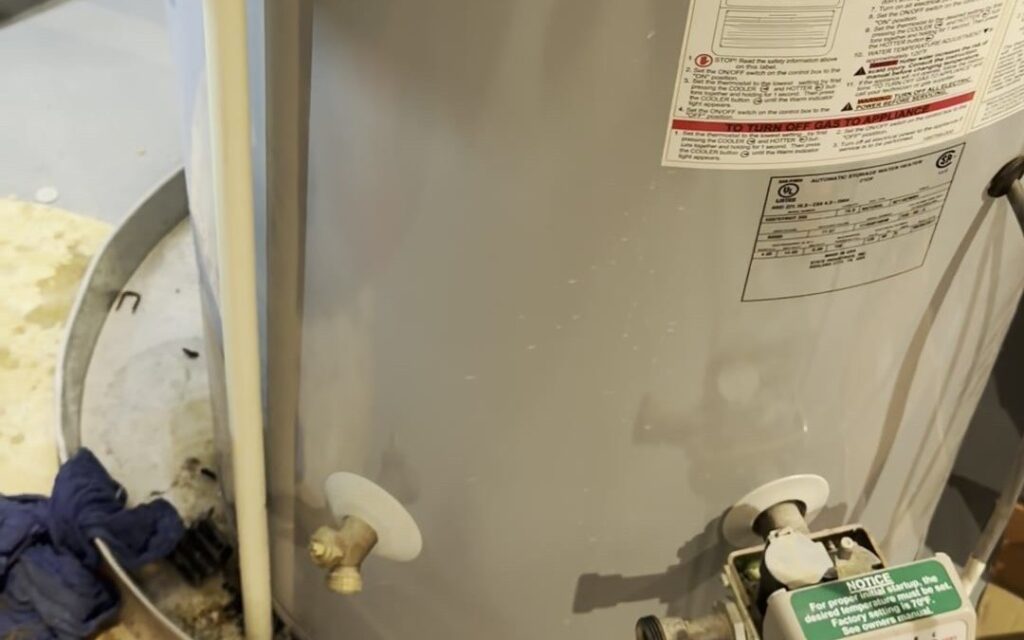
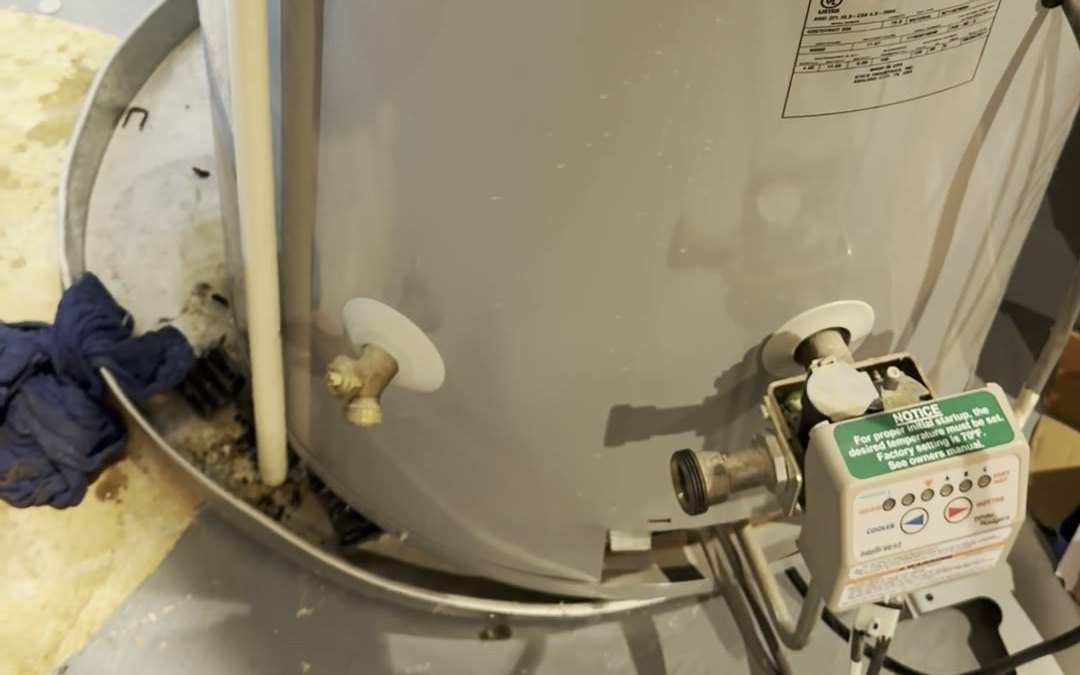
- Find the label. It’s on the front of the tank, near the gas control. It gives the exact order for your model and how long to wait.
- Make sure it has a pilot at all. If your tank has a power cord, a fan on top, or no knob marked PILOT, it lights itself. Skip to the part about tanks that light themselves.
$99 Water Heater Flush
We drain and flush the tank, check the anode rod and test the relief valve, then go through the house's plumbing with photos, included. See the flush
Want your own number before anyone comes out? The water heater estimator prices your house in a few questions.
How to relight it, step by step
- Turn the temperature dial to its lowest setting. On many tanks it’s marked VACATION or PILOT.
- Turn the gas control knob to OFF. Wait at least 5 minutes, or as long as the label says (some say 10), so any gas around the burner clears out.
- Smell again, near the floor. Still nothing? Keep going.
- Turn the knob to PILOT. On most controls you push it in slightly to turn it.
- Push the knob down, or press the separate pilot button, and hold it.
- While you hold it, click the igniter button a few times and watch through the little sight glass at the bottom of the tank for a small blue flame.
- Once the pilot catches, keep holding for 30 to 60 seconds. That gives the thermocouple time to heat up and hold the gas open on its own.
- Let go slowly. The pilot should keep burning. If it goes out, wait the full 5 minutes and try again.
- Turn the knob to ON and set the temperature back to about 120°F. You should hear the burner light with a soft whoosh.
A healthy pilot is a steady blue flame that wraps around the tip of the thermocouple, the thin metal rod beside it. A small, yellow, lazy flame is a dirty pilot, and it’s why so many pilots light fine and then quit a day later.
Sealed tanks: no matches, ever
Most gas tanks made since 2003 are FVIR tanks, short for flammable vapor ignition resistant. The burner sits in a sealed chamber behind a screen at the bottom, so fumes from a gas can or paint thinner in the garage can’t reach the flame. You light these with the built-in igniter only. Don’t try a match or a long lighter, and never pull the inner door off: it’s sealed with a gasket, and opening it can ruin the seal that makes the tank safe.
If the igniter clicks but you see no spark through the glass, the igniter or its wire has failed. That’s a part, and on a sealed tank it’s a job for a plumber.
Tanks that light themselves
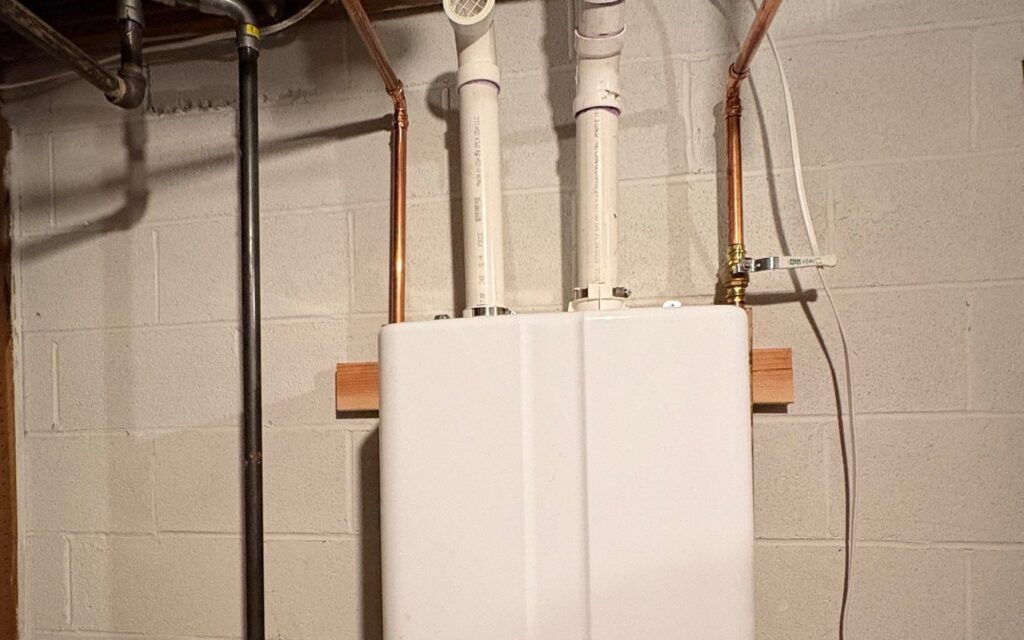
Electronic ignition tanks and power vent tanks don’t have a pilot to relight. If one quits, check the simple stuff first: is it plugged in, and does the outlet have power? A tripped GFCI outlet in a basement or garage is one of the most common reasons a power vent tank goes cold. Then look at the status light and count the flashes; our water heater blinking light guide has the chart, and here’s what a power vent tank looks like.

When it lights but won’t stay lit
If the pilot burns while you hold the knob and goes out the second you let go, your technique is fine. The thermocouple (or the thermopile, on a tank with a status light) isn’t making enough signal to hold the gas valve open. It’s the most common pilot repair we do. Our post on why a water heater pilot keeps going out walks through every cause, and the thermocouple post explains the part itself.
Other times it lights, stays lit for a day or two, then quits again. That points at air, not the part: a draft from an open door or a fan, a clogged screen at the bottom of a sealed tank, or a vent that isn’t drawing. Lint from a nearby dryer clogs those screens fast.
When to stop and call
- You smell gas, or the smell gets stronger while you work.
- You’ve tried three times and it won’t stay lit.
- You see scorch marks, melted plastic or soot around the burner door.
- The flame is yellow or rolls out of the burner area.
- The status light flashes 4, 7 or 8 times between pauses.
- The tank is past 10 years old. Here’s how to read its age off the label.
On a tank with years left, the water heater flush is $99 (normally $199): we drain and flush the tank, check the anode rod and test the relief valve. On an old one, the water heater estimator shows your installed price first, and $500 comes off it. The list of what not to do to a water heater is worth a read either way.
Book it
A plumbing diagnosis visit is $49, or $250 after hours, and you get the price of the fix before we start. Call (703) 997-9757, day or night, or book the water heater flush from goswiftpro.com/cookiesoffer by November 30 and a box of warm MOLTN cookies comes with it. Every current deal is on our offers page. Rated 5.0 stars across 1,138 reviews on Google, Angi, Yelp, the BBB and Facebook, Virginia Class A license 2705192276.
Questions people ask
30 to 60 seconds after the pilot lights, or as long as the label on your tank says. That gives the thermocouple time to heat up. Let go too early and the pilot goes out.
Can I light a water heater pilot with a lighter?
Not on a sealed tank, which is most gas tanks made since 2003. Use the built-in igniter button only. Some older tanks with an open access door allow a long lighter; follow the label.
Why won’t my water heater pilot stay lit?
Usually a worn or bent thermocouple, a dirty pilot, or a clogged air screen at the bottom of a sealed tank. If it goes out the moment you let go of the knob, it’s the thermocouple.
Is it safe to relight a water heater pilot myself?
Yes, if you smell no gas and follow the label on the tank. If you smell gas, leave the house and call the gas company or 911 from outside.
Do all gas water heaters have a pilot light?
No. Power vent and electronic ignition tanks light themselves and have no pilot to relight. If yours has a power cord, check the outlet first.