The short answer
When a water heater pilot keeps going out in Northern Virginia, it’s usually one of three things: a worn thermocouple that can’t hold the gas open, a dirty pilot flame that doesn’t heat it properly, or a sealed tank that can’t get enough air because the screen at the bottom is packed with lint. Drafts, a vent that isn’t pulling and the gas supply cover most of the rest. Notice when it goes out, because the timing tells you which.
Start with when it goes out
Swipe to see all columns →
Swipe to see all columns →
| When it goes out | What it usually is |
|---|---|
| The second you let go of the knob | The thermocouple or thermopile: worn, bent out of the flame, or loose |
| A few minutes to a few hours later | A dirty pilot, a draft, or a clogged air screen |
| When the main burner kicks on | Not enough air, or a vent that isn’t drawing |
| Every day or two, over and over | A clogged air screen, a failing thermocouple, or the flammable vapor sensor |
| Right after a gas meter swap or a new appliance | Air in the gas line, which clears with a few relights |
$99 Water Heater Flush
We drain and flush the tank, check the anode rod and test the relief valve, then go through the house's plumbing with photos, included. See the flush
Want your own number before anyone comes out? The water heater estimator prices your house in a few questions.
1. The thermocouple is worn out
The thermocouple is a thin copper lead with a metal tip that sits in the pilot flame. Heat makes it generate about 20 to 30 millivolts, thousandths of a volt, and that holds a magnet in the gas valve open. When the tip burns away after years in the flame, the signal drops and the valve snaps shut. It’s the most common reason a pilot won’t stay lit, and it’s a short repair. More in our thermocouple post.
2. The pilot flame is dirty
A good pilot is steady and blue and wraps the top half inch of the thermocouple tip. A dirty pilot orifice gives you a small, yellow, lazy flame that barely touches it. The thermocouple runs cool, the signal stays weak, and the pilot quits whenever anything disturbs it. Cleaning the pilot fixes it.
3. The status light says 2 flashes
Tanks with a status light on the gas control run on a thermopile, a bigger cousin of the thermocouple. Two flashes between pauses means its signal is weak: the same dirty pilot, or a tired thermopile. Our blinking light guide has the full chart.
4. The air screen at the bottom is clogged
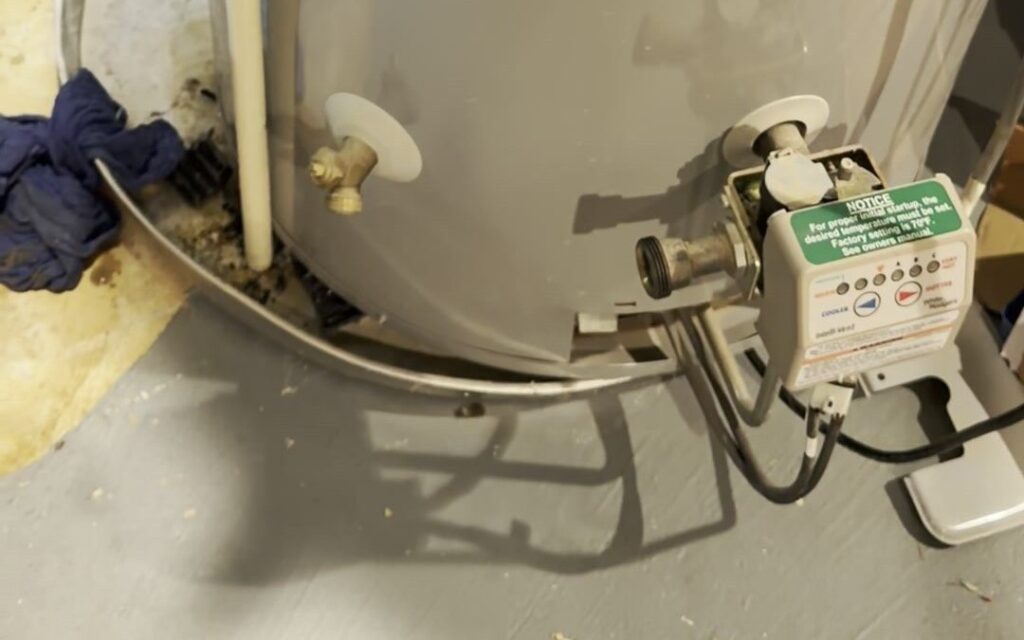
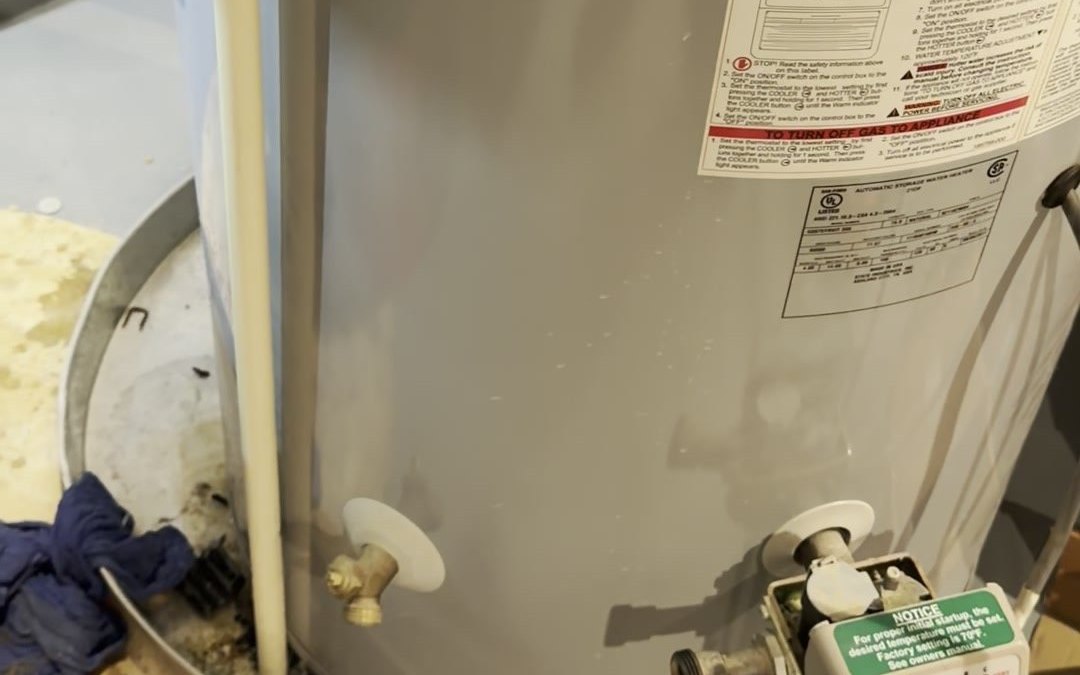
Most gas tanks made since 2003 have a sealed burner chamber with a flame arrestor screen at the bottom. It keeps fumes away from the flame, and it’s also where the pilot gets its air. In a laundry room or a garage, lint, dust and pet hair pack that screen until the pilot starves and goes out. You’ll often see a gray mat of fuzz around the base of the tank. Vacuuming the outside helps; a screen that’s clogged on the inside needs a plumber.
5. Fumes tripped the vapor sensor
Those same sealed tanks have a sensor that shuts the burner down if it picks up flammable vapors: gasoline, paint thinner, a leaky gas can, solvents stored next to the tank. Once it trips, the pilot won’t stay lit. On some tanks a plumber can reset it, and on others the part is a one-time fuse that gets replaced. Either way, move anything flammable away from the tank.
6. Drafts, and a vent that won’t draw
A door that swings open next to the tank, a box fan or an open window in the utility room can blow a pilot out. So can the reverse: a house that pulls air down the flue. A big kitchen exhaust fan, a dryer and a tight house can starve the water heater of air, and a blocked or disconnected flue does the same. That’s called backdrafting, and it’s a carbon monoxide problem, not just a pilot problem. Here’s how to spot backdrafting.
7. The gas isn’t getting there
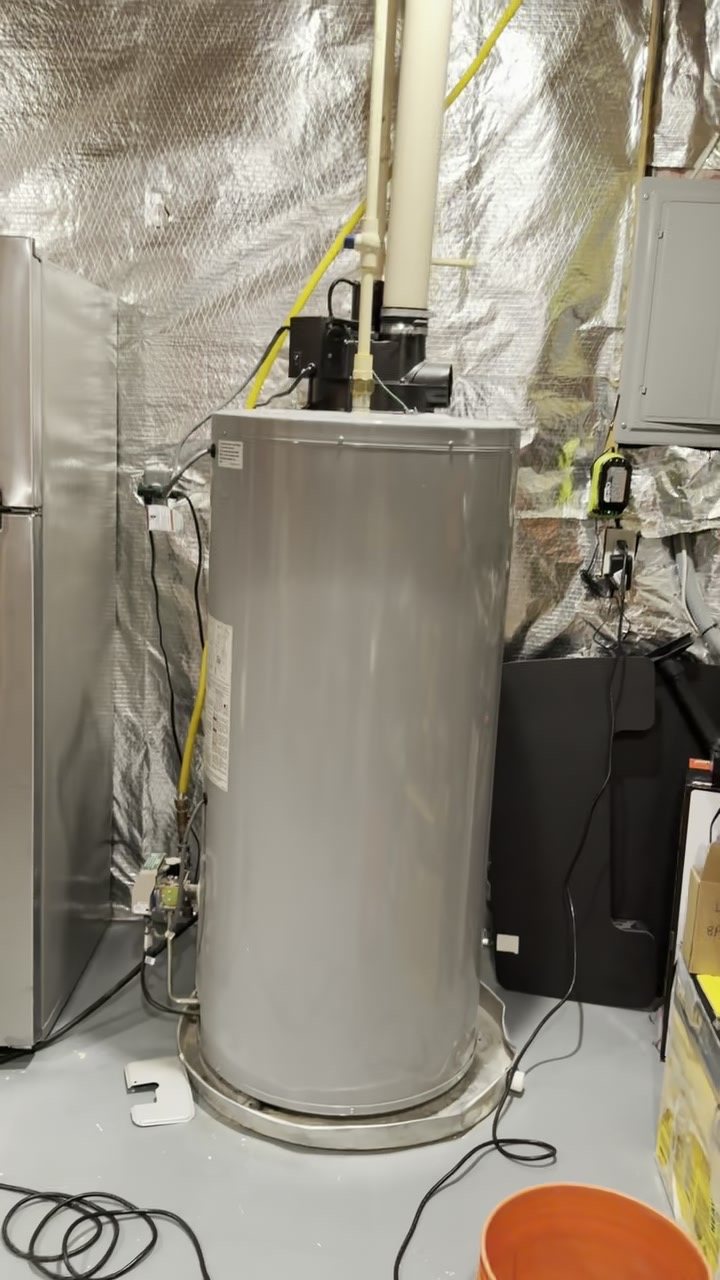
- The valve on the gas line to the tank got bumped partly closed.
- The propane tank is low. The pilot is the first thing to sputter.
- The gas company swapped your meter, or someone added an appliance, and there’s air in the line. The pilot lights, burns a minute and dies. A few tries usually clears it.
When the gas control is the problem
If the status light flashes 4 or 7 times between pauses, the gas control has failed or its overheat safety tripped, and the control gets replaced. Don’t keep relighting a tank that does that. Brand by brand: Bradford White codes and A. O. Smith codes.
Repair it or replace the tank?
A thermocouple or a pilot cleaning is a normal repair on a young tank. On a tank that’s 10 to 12 years old, a new gas control or pilot assembly is money spent on a tank that’s close to done anyway. Here’s how to tell how old yours is and how long a water heater lasts. If you go new, the water heater estimator shows your installed price first, and $500 comes off it. If you want to try relighting it yourself first, here are the steps.
Book it
A plumbing diagnosis visit is $49, or $250 after hours, and you get the price of the fix before we start. Call (703) 997-9757, day or night, or book the water heater flush from goswiftpro.com/cookiesoffer by November 30 and a box of warm MOLTN cookies comes with it. Every current deal is on our offers page. Rated 5.0 stars across 1,138 reviews on Google, Angi, Yelp, the BBB and Facebook, Virginia Class A license 2705192276.
Questions people ask
Why does my water heater pilot go out when I let go of the knob?
The thermocouple isn’t holding the gas valve open. It’s worn, bent out of the flame, or loose at the gas control. It’s the most common pilot repair.
Can a dirty pilot make it go out?
Yes. A dirty pilot burns small and yellow and doesn’t heat the thermocouple enough. A clean pilot is steady and blue and wraps the tip.
Why does my water heater pilot go out every few days?
Usually a clogged air screen at the bottom of a sealed tank, a draft, or a thermocouple on its way out. Lint from a nearby dryer is a common cause.
Can wind blow out a water heater pilot?
Gusts can push air down the flue and blow out a pilot, especially on a short or poorly capped vent. If it happens on windy days, have the vent checked.
Should I replace the thermocouple or the water heater?
On a tank under about 10 years old, replace the part. On an older tank, weigh the repair against a new tank before you spend.