


The short answer
Most gas furnaces in Northern Virginia built since the early 1990s don’t have a pilot light. They light with a hot surface igniter or a spark that only runs when the heat comes on. If yours does have a standing pilot, the relight steps are on the label inside the furnace door, and they work like a water heater’s: knob to OFF, wait, PILOT, hold, light, keep holding, ON. A pilot that won’t stay lit is usually the thermocouple. A yellow pilot means shut it down and call.
Does your furnace have a pilot?
Take the front door off the furnace and look. On newer furnaces, a switch behind the door cuts the power when you pull it, which is normal. Here’s how to tell what you’ve got:
Swipe to see all columns →
Swipe to see all columns →
| What you see | What it is |
|---|---|
| A small flame burning all the time, and a gas knob marked OFF, PILOT and ON | A standing pilot |
| A gray or black ceramic piece that glows orange when the heat starts | A hot surface igniter: no pilot to relight |
| A clicking spark, then a small flame, then the burners | An intermittent pilot: it lights itself every cycle |
| A blinking light on a control board | A modern furnace that can tell you a code |

If you have any of the last three, there’s nothing to relight. Count the flashes and match them to the chart on the door; our furnace blinking light guide walks through it, and furnace won’t turn on covers the rest.
The $67 Heating Check
We check your furnace, heat pump or boiler before winter. Through December 31. See the offer
How to relight a standing pilot
Follow the label inside your furnace door. Most read like this:
- Turn the thermostat down so it isn’t calling for heat.
- Turn the knob on the furnace’s gas valve to OFF. Wait 5 minutes for any gas to clear. If you smell gas, stop, leave, and call the gas company from outside.
- Turn the knob to PILOT, push it in and hold it.
- Light the pilot with the igniter button, or a long lighter if the label says to.
- Keep holding for 30 to 60 seconds after it lights.
- Let go. If the pilot stays lit, turn the knob to ON and turn the thermostat back up.
If it lights and goes out when you let go, it’s almost always the thermocouple, the same part a water heater uses. Our thermocouple post explains how it works and how it fails.
The pilot flame tells you a lot
A healthy pilot is crisp and blue, maybe with a little yellow at the very tip, and it wraps around the thermocouple. A pilot that’s mostly yellow, lazy, or lifting off the pilot burner means the gas isn’t burning cleanly, and that makes carbon monoxide. Turn the furnace off, make sure your CO alarm works, and call. Here’s what to do when a CO alarm goes off, and why a cracked heat exchanger is the part we look at hardest on an older furnace.
A standing pilot means an old furnace
A furnace with a standing pilot is usually 30 years old or more. It burns gas around the clock just to keep the pilot lit, it turns a lot less of its gas into heat than a new furnace does, and its heat exchanger has decades of heat cycles on it. That doesn’t mean it has to go tomorrow. It means it deserves a close look every fall, and a plan. Here’s what an old furnace costs you to run.
Boilers too
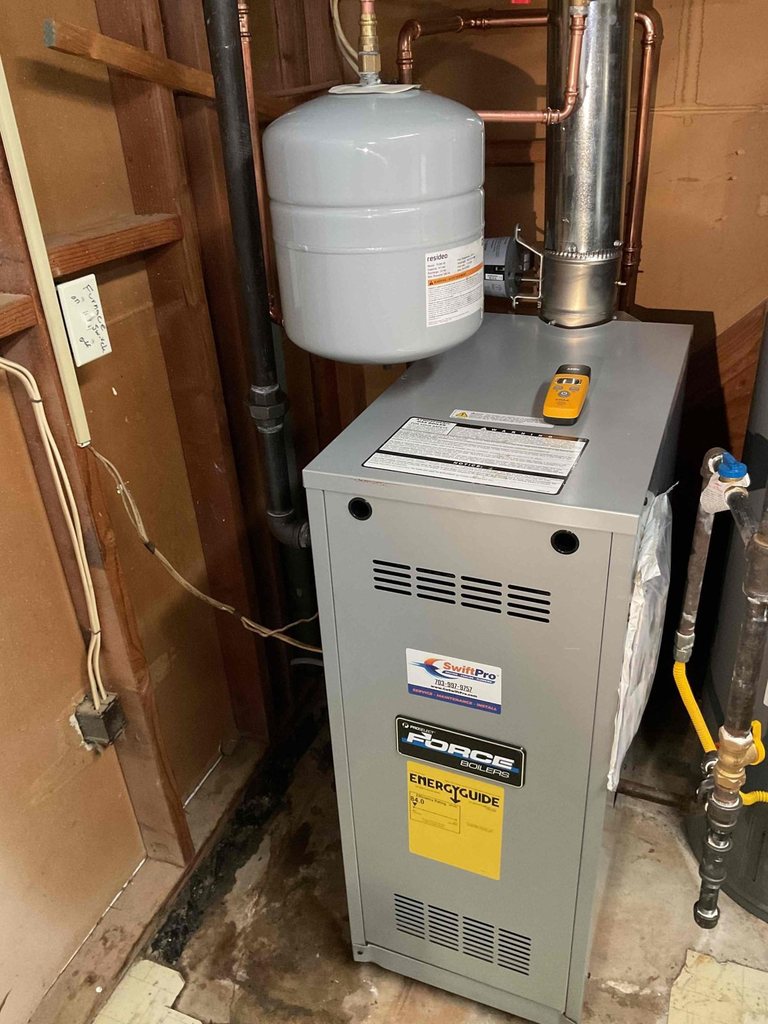
Plenty of older gas boilers in the area still have standing pilots, with the same OFF, PILOT and ON knob and a thermocouple. The relight steps are on the label inside the boiler’s front panel. If a boiler pilot keeps going out, it’s the same short list: thermocouple, dirty pilot, draft. More on boiler repair and our boiler service.
When the flame sensor is the problem instead
On a modern furnace, the part that proves there’s a flame is a flame sensor, not a thermocouple. When it gets coated, the furnace lights, runs a few seconds and shuts off, then tries again. It’s one of the most common winter calls we get. See the York flame sensor post, the American Standard one, or our flame sensor video.
Before the cold settles in
Our heating check is $67 per system, through December 31: furnace, heat pump or boiler. On a furnace, for $229 (regularly $467) we also pull the blower wheel and clean it blade by blade, fit a new filter, set your dampers for winter and tune the furnace. If yours has a standing pilot, ask us to look at the pilot flame while we’re there.
Book it
A repair visit starts with a flat $99 diagnostic, or $250 after hours, and you get the price of the fix before we touch anything. Call (703) 997-9757, day or night, or book online from goswiftpro.com/cookiesoffer by November 30 and a box of warm MOLTN cookies comes with the heating check. Every current deal is on our offers page. Rated 5.0 stars across 1,138 reviews on Google, Angi, Yelp, the BBB and Facebook, Virginia Class A license 2705192276.
Questions people ask
Do modern furnaces have a pilot light?
Most don’t. Furnaces built since the early 1990s mostly use a hot surface igniter or an intermittent pilot that lights only when the heat comes on.
Why won’t my furnace pilot light stay lit?
Usually the thermocouple is worn or out of the flame. A dirty pilot or a draft can do it too. If it goes out the moment you let go of the knob, it’s the thermocouple.
What color should a furnace pilot light be?
Blue, crisp and steady, maybe a touch of yellow at the tip. A mostly yellow or lazy pilot means poor combustion: turn it off and call.
Is it safe to relight a furnace pilot light?
Yes, if you smell no gas and follow the label inside the furnace door. If you smell gas, leave and call the gas company from outside.
How do I know if my furnace has a pilot light?
Look for a small flame that’s always burning and a gas knob marked OFF, PILOT and ON. A glowing igniter or a clicking spark means no standing pilot.


