


The short answer
If your York furnace lights, runs a few seconds and shuts off, then tries again, suspect the flame sensor first. In Northern Virginia it’s one of the most common no-heat calls of the fall: a thin rod in the flame picks up a coating over the summer, the board can’t read the flame, and it shuts the gas off to be safe. On a York that shows as 8 red flashes (flame lost five times), 7 red flashes (no flame proven in three tries), or a continuous or rapid amber flash on two-stage and modulating models (weak flame signal). A tech cleans or replaces it in one visit.

What the flame sensor does
The flame sensor is a bent metal rod on a white ceramic base, sitting right in the path of one burner flame. The board sends a tiny current through it, and the flame carries that current to ground. If the board reads it, it knows there’s fire and keeps the gas valve open. If it doesn’t, it closes the gas within seconds, because unburned gas is the one thing a furnace can never let through.
The current really is tiny. York’s two-stage TM9V flags anything under 1.5 microamps (TM9V manual). A thin layer of oxide or dust on the rod, a cracked ceramic, a weak ground, or a flame that doesn’t fully touch the rod each pull it down.
The $67 Heating Check
We check your furnace, heat pump or boiler before winter. Through December 31. See the offer
The York codes that point at it
Swipe to see all columns →
Swipe to see all columns →
| Light | Which furnaces | What it means |
|---|---|---|
| 8 red | Single-stage and two-stage | Flame lost five times in one call; locks out for an hour |
| 7 red | All | No flame proven in three tries; locks out for an hour |
| Continuous amber | TM9V two-stage | Flame signal under 1.5 microamps, still running |
| Rapid amber | YP9C modulating | Low flame signal: a dirty or out of place rod |
From the TM8E, TM9V and YP9C manuals. Seven flashes has other causes too: the gas off, low gas pressure, a cracked igniter or the gas valve. Eight flashes, or an amber warning, points harder at the sensor. The whole chart is in our York furnace code guide.
Signs it’s the flame sensor
- The burners light, burn for a few seconds and go out, then the furnace tries again.
- It started in the fall, the first time the heat ran in months.
- It works some cycles and not others, and gets worse over a few weeks.
- The door light shows 8 red flashes, or an amber warning on a newer York.
If the burners never light at all and the inducer just hums, it’s not the sensor. That’s the pressure switch.
What you can do
Set the thermostat to off. Turn off the breaker or the switch for the equipment, wait about five minutes, turn it back on and set the thermostat back. Do it once. That clears the one-hour lockout and usually gets you heat for now. If it’s back to 8 flashes by evening, the sensor needs attention.
Leave the cleaning to a tech. It means working in the burner area, the ceramic cracks easily, and sandpaper or steel wool can leave a worse film than the dirt it took off. Done right, it’s a short visit.
What a tech does
Power and gas off. The rod comes out with one screw. It gets cleaned with a fine pad, and the ceramic and wire get checked for cracks. Back in, the tech measures the flame current with a meter while the burners run, to prove it’s in range, then checks the ground and watches the flame to make sure it wraps the rod. A sensor that’s cracked or won’t read after cleaning gets replaced.

Then the why. A sensor that’s dirty again in a few weeks is telling you something: a filter that doesn’t seal so dust gets into the burners, a burner that’s off center, a weak ground, or combustion air pulled from a dusty or laundry area. Our heating check is $67 per system, through December 31: furnace, heat pump or boiler. On a gas furnace it includes an inspection of the burners, igniter, flame sensor and heat exchanger.
When it isn’t the flame sensor
If a clean sensor reads well and the furnace still drops out, the tech moves on to gas pressure, the gas valve, the ground wire between the board and the burners, and the igniter. York lists all of them for 7 and 8 flashes.
Other brands
The same part on other furnaces: American Standard flame sensor, Trane 2 flashes, Lennox flashing red light, or the flame sensor problems guide for any brand. Every brand’s codes are in our error codes and warning lights guide, and our York repair page has what we fix and what it costs.
The system we put in first
Built to take a beating. Put in by our crew.
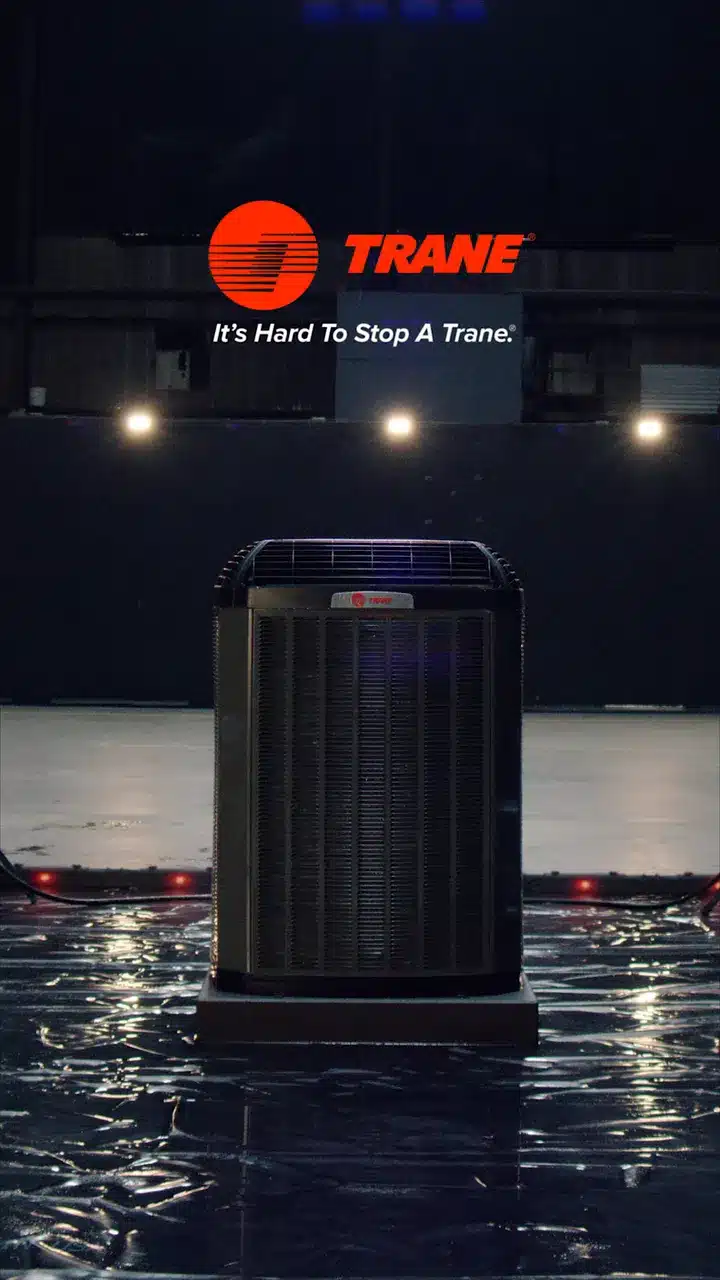
Heat lamps, snow and rain on one outdoor unit: that’s Trane’s own film. We’re a Trane Comfort Specialist, on Trane’s own dealer locator, and when you pick a Trane, our crew puts it in.
Films: Trane’s own.
Book a York repair
Call (703) 997-9757 or book online. A diagnostic visit is $99, and the tech reads the code, finds the part that set it and gives you the price before any work starts. We answer day or night. Our heating check is $67 per system, through December 31: furnace, heat pump or boiler. If someone already quoted you a new system, our free second opinion looks at it first. Rated 5.0 stars across 1,138 reviews on Google, Angi, Yelp, the BBB and Facebook, Virginia Class A license 2705192276.
Questions people ask
How do I know if my York flame sensor is bad?
The furnace lights and shuts off after a few seconds, over and over, and the light in the door shows 8 red flashes, or an amber warning on a newer York. The way to be sure is a meter reading of the flame current, which takes a tech about a minute.
Can a dirty flame sensor cause 7 red flashes on a York?
Yes. Seven flashes means no flame was proven in three tries, and a sensor too dirty to read the flame is one of the causes York lists, along with the gas supply, the igniter and the gas valve.
How often should a flame sensor be cleaned?
Once a year with a heating check is plenty for most furnaces. If it needs it more often, something is coating it, and that’s worth finding.
How long does a furnace flame sensor last?
Often as long as the furnace, if it’s cleaned and nothing cracks the ceramic. When it won’t read after a cleaning, it’s replaced.

