
If water is coming out of a pipe right now, do not read the rest of this page. Do these four things in this order, then come back.
- Shut off the water at the main. Turn it clockwise until it stops.
- Open the lowest faucet in the house, and a couple of others. This drains the pipes and stops the water still sitting in them from finding the hole.
- Kill power to anything the water is reaching. If water is near outlets, a panel, or a furnace, switch off that circuit at the breaker. Do not stand in water to do it.
- If it is the water heater or a specific appliance, shut off its own valve and, for a water heater, turn off the gas or its breaker too.
Once the water is off, pipe repair has our prices for the fix, and we run 24/7 emergency service.
That is the whole emergency. Everything after this point is about doing it faster next time and not being here again.
A supply line is not a sewer line, and the two fail in different ways. If what is actually wrong is the drain side, backing up rather than spraying, start with the sewer camera instead of the shutoff.
Where your main shutoff actually is
The single best thing you can do about a burst pipe is find this valve on a dry Sunday afternoon rather than during the flood. Go find it after you finish reading. Take a photo of it and put the photo where anyone in the house can find it.
In Northern Virginia housing stock it is almost always one of these:
- Basement, on the wall facing the street, usually within a few feet of where the line enters, often near the water meter. This is the common case in Fairfax, Loudoun and Prince William single family homes.
- A utility closet or laundry room in townhouses and newer construction, sometimes behind an access panel.
- A crawlspace, on slab-on-grade homes, which is the worst case and exactly why you want to know now.
- The meter box in the yard, a rectangular lid near the sidewalk or curb. This one usually needs a meter key rather than a hand.
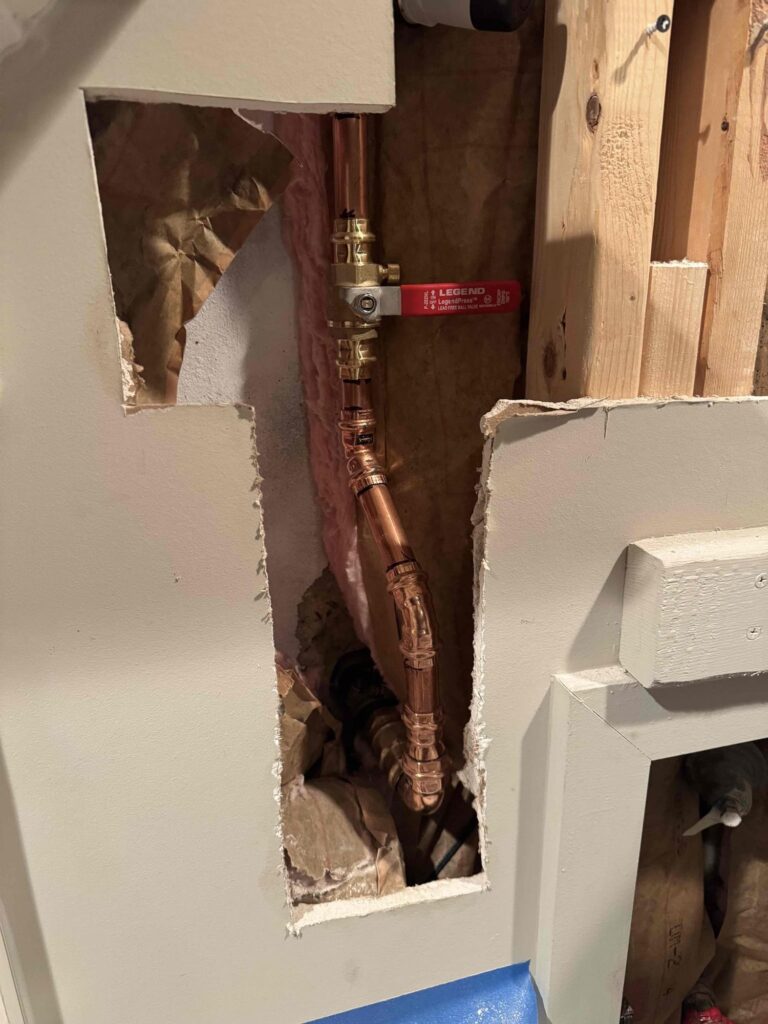
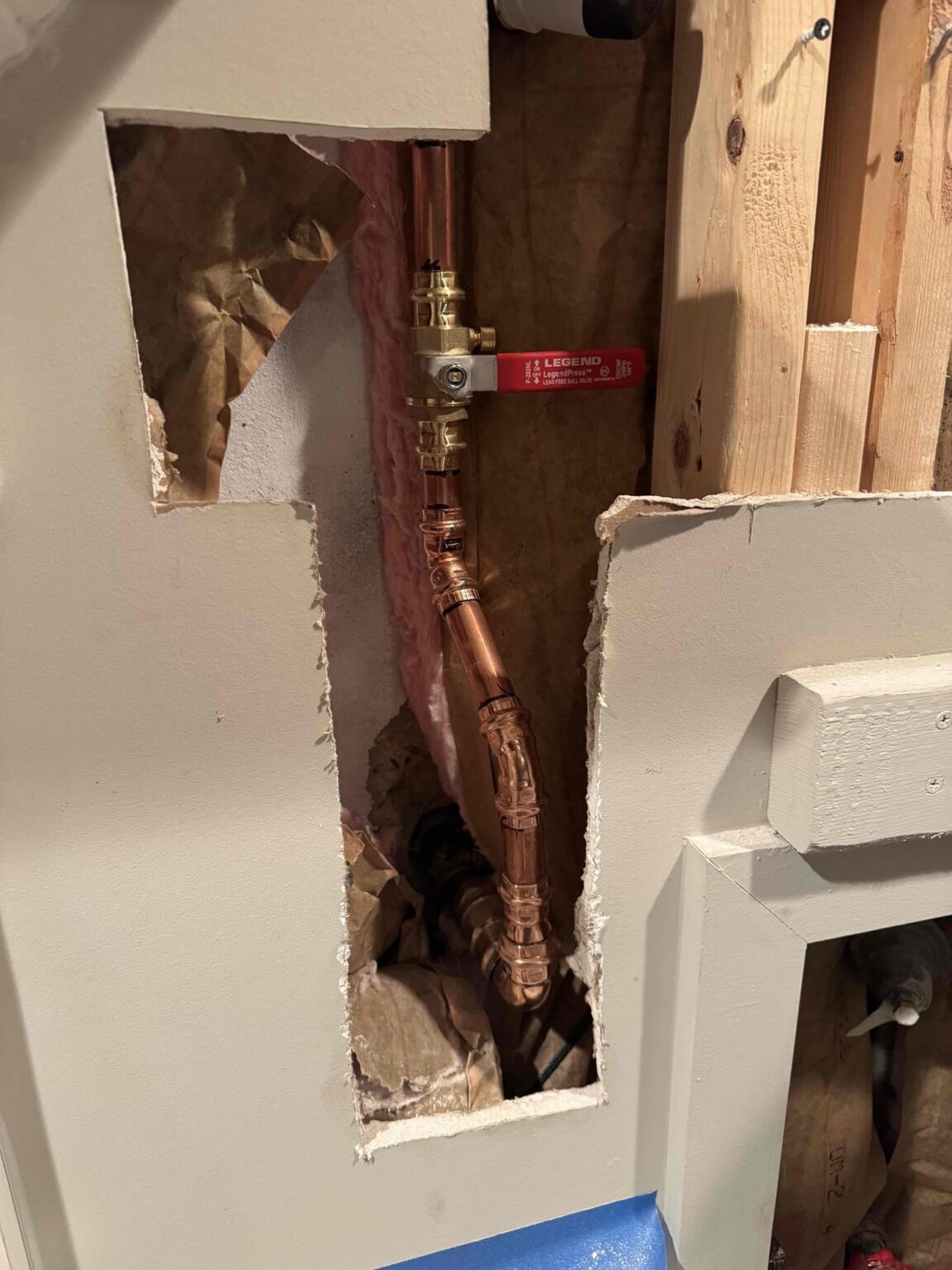
Two kinds of valve. A ball valve has a lever, and a quarter turn until the handle sits across the pipe shuts it. A gate valve has a round wheel, and it takes many turns clockwise. Gate valves seize, which is worth knowing before you need one. If yours will not budge, that is a thing to have replaced on a calm day.
Why pipes burst here
Almost all of it is freezing, and the freezing happens in predictable places.
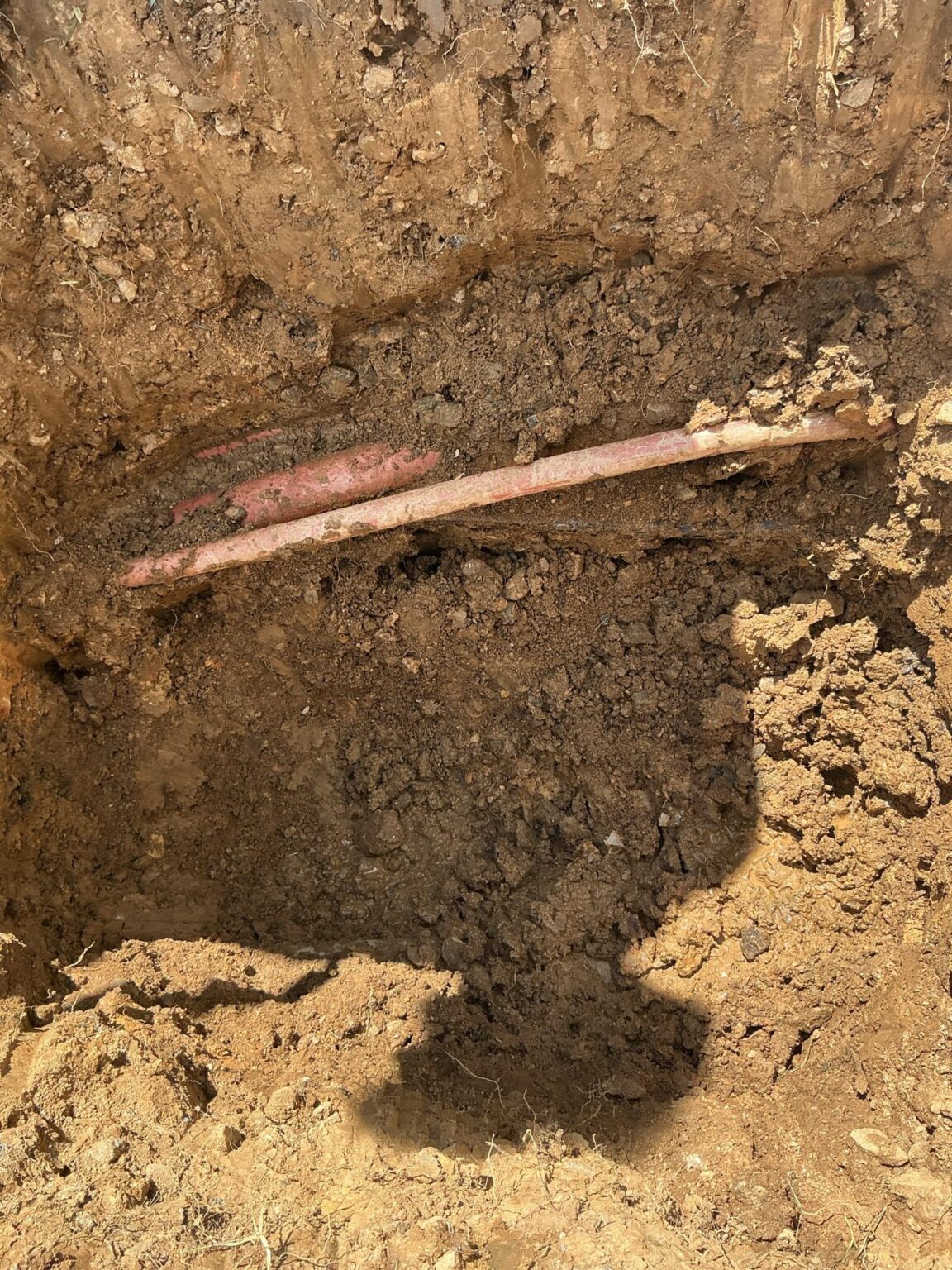
Water expands when it freezes. The ice does not usually split the pipe where it forms, either: it forms a plug, and then the pressure builds between that plug and a closed faucet downstream until the pipe fails at the weakest point, which can be feet away.
The spots that get us every January in Northern Virginia:
- Hose bibs with a hose still attached. The hose holds water against the valve, the valve freezes, and the split shows up inside the wall.
- Pipes in an unheated garage, especially along an exterior wall.
- Crawlspaces and attics, anywhere insulation stops but pipe keeps going.
- Kitchen sinks on an outside wall, which is why leaving the cabinet doors open on a cold night is genuinely useful advice.
- Vacant or vacation-empty houses with the heat set too low.
The other causes: pressure over 80 psi steadily working on every joint in the house, corrosion in old galvanized or polybutylene, and a supply hose behind a washing machine that nobody has replaced since the house was built.
After the water is off
Get the water out. Towels and a wet vacuum, fast. Standing water is the difference between a repair and a restoration job.
Move what you can and get things up off the floor. Cardboard boxes wick.
Photograph everything before you clean it up. Wide shots and close shots. If you end up filing a claim, this is the evidence, and it is unrecoverable once you have tidied.
Get air moving. Fans and a dehumidifier, doors open. Anything that stays wet more than a day or two becomes a biological growth problem on top of a plumbing one.
Call your insurer if it reached finished space. Sudden pipe failure is usually covered where slow long-term seepage is not, which is another reason the timeline in your photos matters.
If you think it is frozen but it has not burst yet
Low or no flow from one fixture on a cold morning, with everything else working, usually means a plug rather than a break. You may have a short window.
Open the faucet that pipe feeds, so melting ice has somewhere to go and the pressure has an exit. Warm the pipe with a hair dryer or a space heater at a safe distance, working from the faucet end back toward the frozen section, never from the middle. Do not use an open flame on a pipe. That is how a plumbing problem becomes a house fire, every single winter, somewhere.
And know where the shutoff is before you start thawing, because a pipe that has already split will announce itself the moment the ice clears.
Preventing the next one
Before the first hard freeze: disconnect every garden hose and drain the bibs. Insulate pipe in the garage, crawlspace and attic. Seal the drafts where the cold is actually getting in, which matters more than the insulation does.
During a cold snap: keep the house at 55 degrees or above even when nobody is home, open cabinet doors under sinks on exterior walls, and let one far-corner faucet drip. A dripping faucet is not about the water moving, it is about relieving the pressure that does the damage.
Once a year: replace the rubber washing machine hoses with braided stainless, check your water pressure, and if you have an irrigation system, get the backflow preventer winterized before the first freeze.
Professional Emergency Plumbing Assistance in Northern Virginia
SwiftPro handles burst pipes, emergency repairs and repiping across Northern Virginia. If it is happening now, use the emergency line or call (703) 997-9757. If it is a valve that will not turn or a pipe you do not trust, book a visit and get it dealt with before January does it for you.
Related: how a plumber finds a hidden leak.
Prevention: how to keep pipes from freezing, the outdoor spigot that floods in April.
Watch our plumbers on real jobs
Real jobs in Northern Virginia homes, filmed by our own crew. Tap one to watch.