The short answer
The small valve on the wall behind a toilet in a Northern Virginia home is called an angle stop. When it drips from the stem after you turn it, a small turn on the packing nut usually stops it. When it won’t turn, or turns but won’t fully shut off the water, don’t force it. An old valve can snap or start leaking worse. Shut off the main to the house and replace it with a quarter turn valve and a new braided supply line, and the next time you need it, it works.
Two kinds of valve
An oval handle that turns around several times is a multi turn valve. Inside is a rubber washer that presses against a seat, and after years of sitting open, the washer hardens and mineral builds up around the stem. That’s the one that sticks. A short lever or a handle that stops after a quarter turn is a quarter turn valve, with a ball inside. It’s harder to seize and you can see at a glance whether it’s open.
How the valve attaches to the pipe matters for replacing it: a compression nut on copper, soldered on, threaded onto iron, or crimped onto plastic PEX in newer homes.
Swipe to see all columns →
| What it’s doing | Why | The fix |
|---|---|---|
| Drips from the stem when you turn it | The packing nut is loose or the packing dried out | Snug the packing nut a little |
| Won’t turn | An old washer and mineral have it stuck | Don’t force it; shut the main and replace it |
| Turns, but the toilet keeps filling | The washer is worn and won’t seal | Replace the valve |
| Drips at the wall | The nut or the ring that seals it to the pipe | Snug it, or replace the valve |
| Drips where the supply line connects | A loose nut or a worn line | Snug it, or a new line |
| The supply line is bulged, kinked or crusty | The line is failing | Replace it now; this is the one that floods |
Snug the packing nut
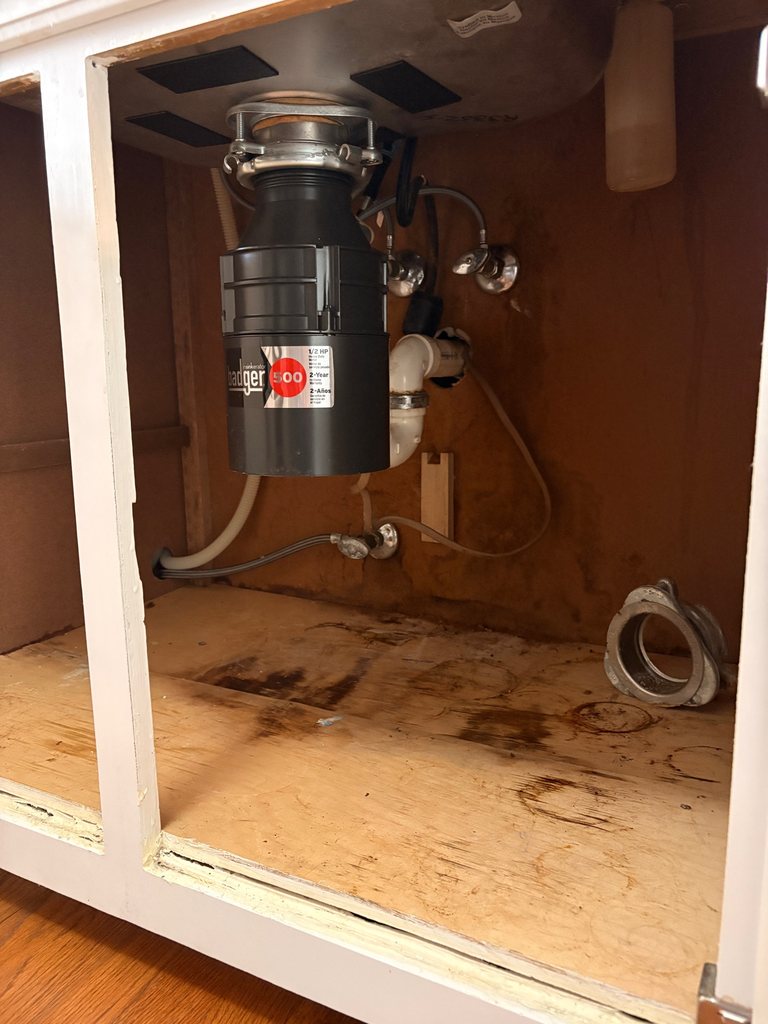
The packing nut is the nut right behind the handle. Hold the valve body steady with one wrench and turn the packing nut clockwise about a quarter turn with another. That squeezes the packing around the stem. If it still weeps, go another small bit. If cranking on it is the only thing that slows the drip, the valve is done.
Why not to force it
An old stem can break off in your hand, or the valve can start leaking at the stem and refuse to close. Leaning on it can also twist the pipe inside the wall. Before you try, know where your main shutoff and the other valves are, so you can stop the water if the valve lets go. If the main itself is stuck too, main water shutoff valve replacement covers that one.
Replace the valve and the line together
When we replace a toilet valve, the supply line goes too, a braided stainless line sized to the toilet. Old plastic lines with plastic nuts crack with age, and a cracked line under full house pressure can flood a bathroom and the ceiling under it in minutes. If a new valve won’t shut the water off at the toilet, toilet overflowing shows how to stop the tank by hand. If you’re replacing the toilet fill valve, that’s the time to do the line too. And if the water around the toilet is coming from the tank, toilet tank leaking goes through the bolts and the gasket.
Turn them once a year
A valve that never moves is the one that won’t move when you need it. Once a year, turn each valve under a sink and behind a toilet closed and back open. Do it on a day you could shut the main if one starts to drip, and if one is stiff, leave it and have it replaced instead of forcing it.
A dripping valve is one of the small warning signs that’s cheap to fix early. Every warning sign around the house, from a furnace’s blinking light to the sounds a house makes, is in one guide.
Fix it small, fix it now
A toilet problem caught early stays cheap three ways. The water and sewer bill stops climbing. The water stays out of the floor and the ceiling under it. And it stays a part and an hour instead of a subfloor later. Almost everything we find wrong inside a toilet is repairable, and once it’s fixed right, you stop listening for it.
What it costs when we fix it
Flappers, fill valves, handles, shutoff valves and supply lines are all toilet repair, $250 to $900, with the price in writing before we start, and we check the rest of the toilet while the lid is off. When the toilet itself is worn out, a new one installed runs $800 to $1,300, and this month’s coupons on our offers page take $100 off a new toilet, or $50 off any plumbing repair over $400. Any plumbing repair also comes with a whole-house plumbing inspection, a $149 value. If water is showing up where it shouldn’t and you can’t tell where it starts, leak detection runs $200 to $500. A plumbing diagnosis visit is $49, or $250 after hours.
Call (703) 997-9757, day or night, or book a toilet repair online. Rated 5.0 stars across 1,138 reviews on Google, Angi, Yelp, the BBB and Facebook, Virginia Class A license 2705192276.
Questions people ask
Why is the shut off valve behind my toilet leaking?
If it drips from the stem, the packing nut is loose. If it drips at the wall or at the supply line, a nut or the line is loose or worn. Snug the packing nut a quarter turn first.
What do I do if my toilet shut off valve won’t turn?
Don’t force it. Shut off the main water to the house and have the valve replaced. An old stem can snap and leave you with water you can’t stop.
Should I replace a multi turn valve with a quarter turn valve?
Yes, when it’s being replaced anyway. A quarter turn valve is harder to seize and shows at a glance whether it’s open.
How often should a toilet supply line be replaced?
Look at it once a year. Replace it when you replace the fill valve or the toilet, or right away if it’s bulged, kinked or crusty at the nuts.
How much does it cost to replace a toilet shut off valve?
When we do it, a shutoff valve and a new supply line are a toilet repair, $250 to $900, priced in writing before we start.