The short answer
A toilet that clogs every week or two in a Northern Virginia home usually has one of six problems: wipes or too much paper, something stuck inside the toilet, an early low flow toilet that doesn’t push hard enough, a partial clog farther down the line, roots or a broken pipe in the main line, or a blocked vent. The quickest clue is the other drains. If the tub or a sink gurgles or backs up too, the problem is in the line, not the toilet, and plunging won’t fix it for long.
Which one is it
Swipe to see all columns →
| The clue | Usually | The fix |
|---|---|---|
| Only this toilet, and a plunger always clears it | Wipes, too much paper, or a weak flush | Change what goes in, then look at the flush |
| It started after a child was in the bathroom | A toy, a comb or a toothbrush in the toilet | A toilet auger, or pull the toilet |
| A 1990s toilet that clogs often | An early low flow bowl | A newer toilet that flushes harder |
| The tub gurgles or backs up when you flush | A partial clog in the main line | Main line cleaning |
| Clogs plus slow drains and a sewer smell, older house | Roots, a sag or a broken line | A camera down the line |
| The bowl gurgles and flushes weak, no clog found | A blocked vent on the roof | Clear the vent |
Wipes and paper
Wipes sold as flushable don’t break apart in the pipe the way toilet paper does. They snag, catch paper, and build a plug a little farther down every week. Thick paper does some of the same in an older line. What never goes down a drain has the full list. Flushing twice, once halfway through, helps a weak toilet more than anything else you can do for free.
Something stuck in the toilet
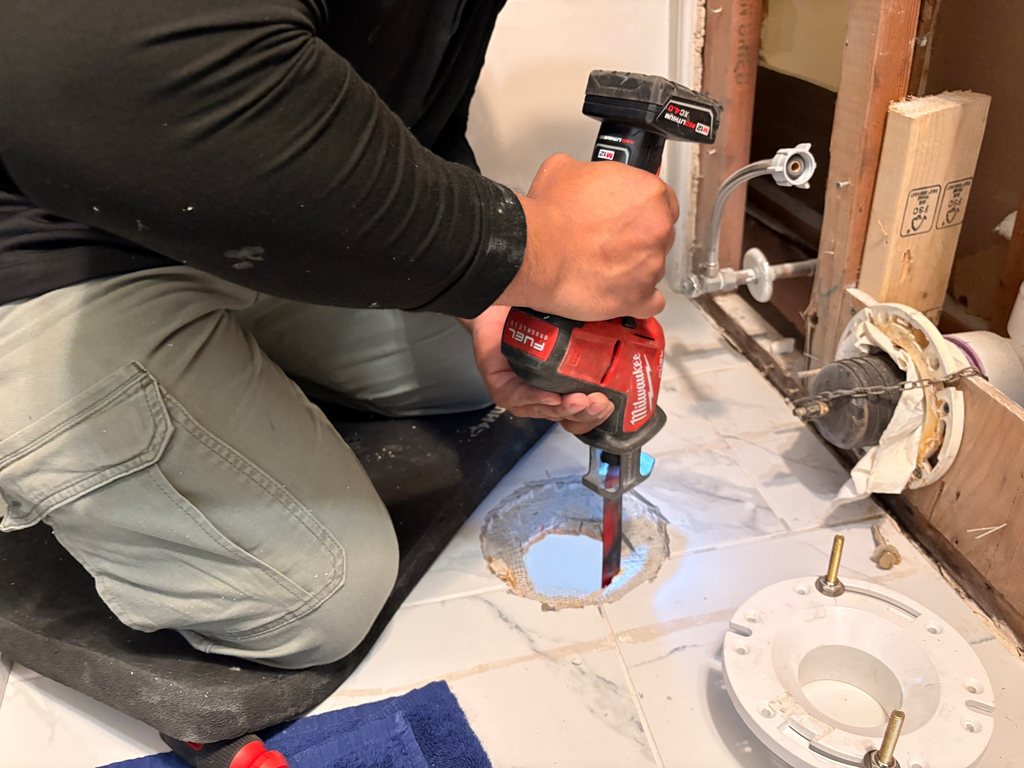
A toy or a comb wedged in the curve inside the toilet lets water past and catches paper. A plunger pushes the water through and the clog forms again on the next few flushes. A toilet auger, the short snake with a bent end, can hook it, and how to use a drain snake shows how. If the auger can’t get it, the toilet comes off the floor and it gets pushed out from underneath. How to unclog a toilet covers the first steps.
An early low flow toilet
The first 1.6 gallon toilets from the mid 1990s often didn’t flush hard enough, and some still clog every week. Clogged rim holes make any toilet weaker; toilet flushes slow shows how to clear them. If the toilet is that old and the flush is weak with clean rim holes, a newer one fixes it. Comfort height toilet goes through what to look for, including the flush score. If the bowl also sits low between flushes, toilet bowl water level low explains why.
When it’s the line, not the toilet
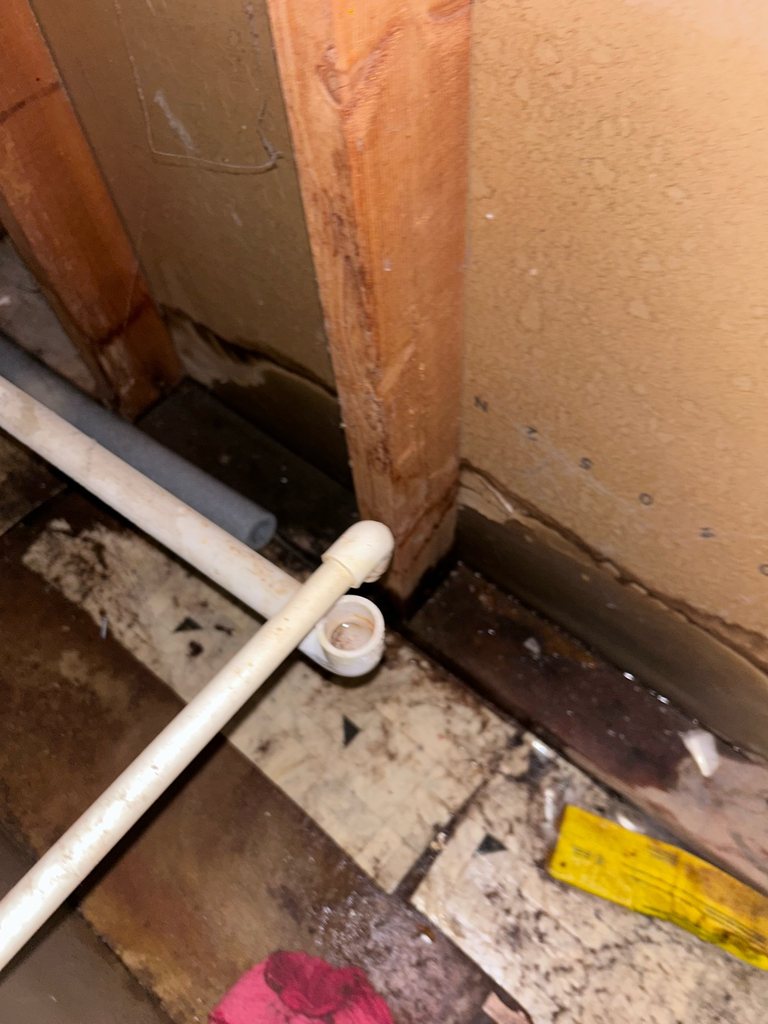
The toilet is usually the first fixture to show a problem in the main line, because it sends the most water at once. Signs it’s the line: the tub gurgles or fills when you flush, a basement floor drain backs up, more than one drain is slow, or there’s a sewer smell. One drain or the main line sorts it out, and main sewer line clog covers what to do. If water is coming up in the basement, sewer backup in the basement is the one to read first.
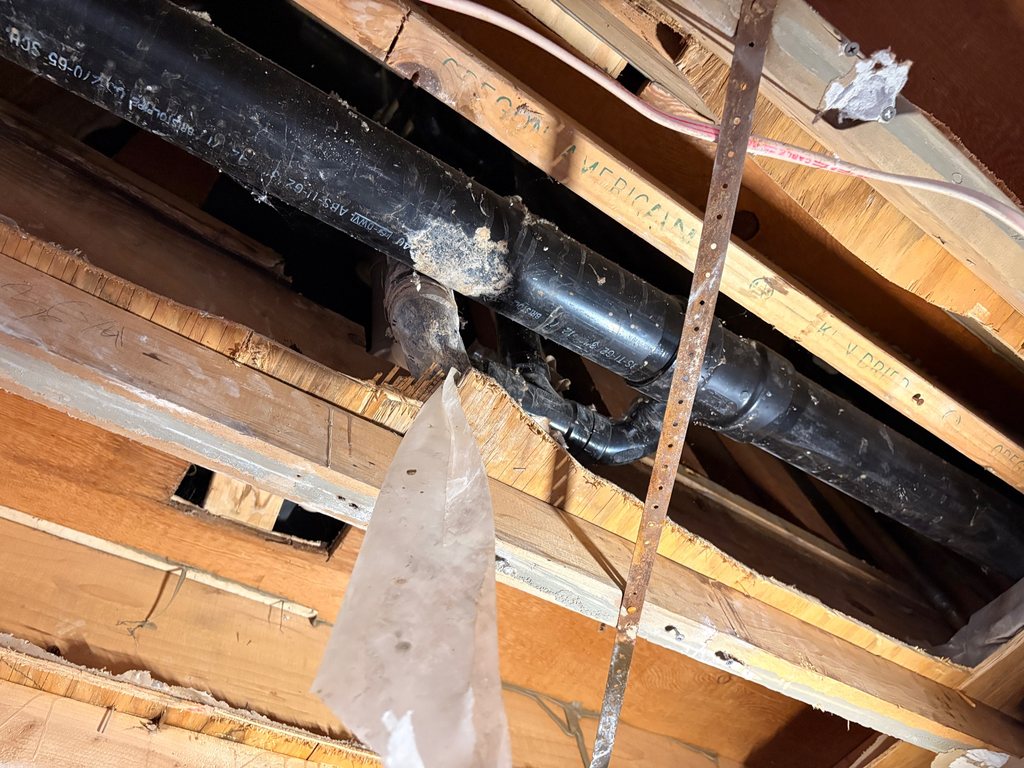
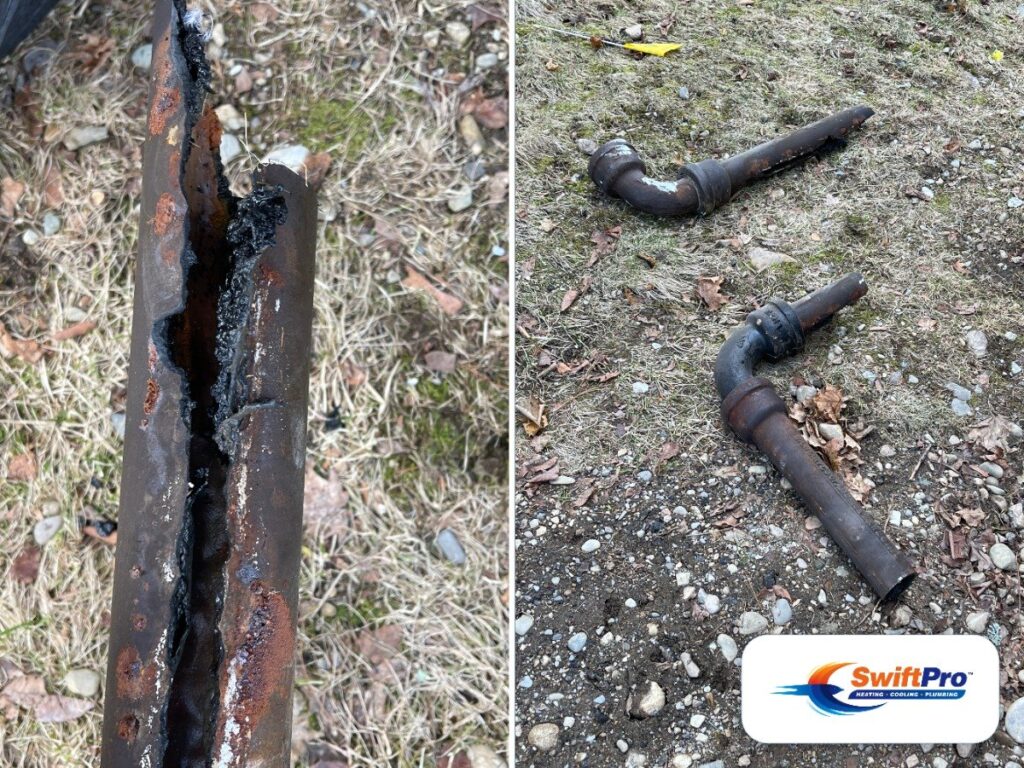
Homes built from the 1950s through the early 1970s often have cast iron or clay, and some have Orangeburg pipe, a fiber pipe that sags and collapses. Roots find the joints. A camera down the line shows which, and sewer camera inspection explains what we look for.
A blocked vent
Every drain needs air behind the water. If the vent on the roof is blocked by leaves or a nest, the toilet flushes weak, gurgles, and clogs more often. The plumbing vent pipe and why a toilet gurgles explain how a vent problem reads differently from a clog.
What not to do
Don’t pour chemical drain cleaner into a toilet. It sits in the bowl, it’s hard on old pipe, and it’s dangerous for whoever plunges next. Is Drano bad for pipes explains why. And don’t keep flushing a clogged toilet; toilet overflowing shows how to stop the water if you already did.
When we clear it, a clogged toilet is drain cleaning for one fixture, $200 to $800. A main line cleaning runs $550 to $1,650. Either way the price is in writing before we start.
A toilet that keeps clogging is a warning sign about the line under the house. Every warning sign around the house, from a furnace’s blinking light to the sounds a house makes, is in one guide.
Fix it small, fix it now
A toilet problem caught early stays cheap three ways. The water and sewer bill stops climbing. The water stays out of the floor and the ceiling under it. And it stays a part and an hour instead of a subfloor later. Almost everything we find wrong inside a toilet is repairable, and once it’s fixed right, you stop listening for it.
What it costs when we fix it
Flappers, fill valves, handles, shutoff valves and supply lines are all toilet repair, $250 to $900, with the price in writing before we start, and we check the rest of the toilet while the lid is off. When the toilet itself is worn out, a new one installed runs $800 to $1,300, and this month’s coupons on our offers page take $100 off a new toilet, or $50 off any plumbing repair over $400. Any plumbing repair also comes with a whole-house plumbing inspection, a $149 value. If water is showing up where it shouldn’t and you can’t tell where it starts, leak detection runs $200 to $500. A plumbing diagnosis visit is $49, or $250 after hours.
Call (703) 997-9757, day or night, or book a toilet repair online. Rated 5.0 stars across 1,138 reviews on Google, Angi, Yelp, the BBB and Facebook, Virginia Class A license 2705192276.
Questions people ask
Why does my toilet keep clogging?
Wipes or too much paper, something stuck inside the toilet, an early low flow toilet, a partial clog in the line, roots in the main line, or a blocked vent. If other drains gurgle too, it’s the line.
How do I stop my toilet from clogging?
Keep wipes out, flush twice for a big load, clear the rim holes, and have the line looked at if it keeps happening.
Can a main line clog make a toilet clog?
Yes. The toilet is often the first fixture to back up, because it sends the most water at once. A tub that gurgles when you flush is the clue.
When should I replace a toilet that keeps clogging?
When it’s an early low flow toilet from the 1990s, the rim holes are clear, the line checks out, and it still clogs.
How much does it cost to fix a toilet that keeps clogging?
When we do it, clearing a toilet is drain cleaning for one fixture, $200 to $800. If the clog is in the main line, cleaning it runs $550 to $1,650. The price is in writing before we start.