The short answer
A toilet’s rough-in is the distance from the finished wall behind it to the center of the drain, which you measure to the bolts that hold it to the floor. Most homes in Northern Virginia are 12 inches. Some older homes, condos and small bathrooms are 10 or 14. Buy a toilet with the same rough-in as your drain and it sits right against the wall and lines up over the pipe. Buy the wrong one and the tank hits the wall, or sits out from it with a gap.
How to measure
- Find the bolt caps on each side of the toilet’s base. If there are two on each side, use the back pair.
- Measure from the wall itself, not the baseboard or the trim, straight out to the center of a bolt.
- Round to the nearest standard size: 10, 12 or 14 inches.
- If the toilet is already out, measure from the wall to the center of the drain opening in the floor.
Swipe to see all columns →
| Your measurement | Rough-in | Where you see it |
|---|---|---|
| About 11 to 12 and a half inches | 12 inch | Most homes |
| About 9 and a half to 10 and a half inches | 10 inch | Small bathrooms, some condos and older homes |
| About 13 and a half to 14 and a half inches | 14 inch | Some older homes |
| Anything else | An odd spot | An offset flange may fix it |
Why it matters
The drain under a toilet is a fixed point. A 12 inch toilet on a 10 inch drain won’t fit, because the tank runs into the wall before the bowl lines up. A 10 inch toilet on a 12 inch drain fits, with a 2 inch gap behind the tank. It works fine and looks a little off. A few toilets are made with an adjustable outlet that fits more than one rough-in, which helps in an odd bathroom. Most 10 and 14 inch toilets come in fewer styles than 12, so check before you fall for one.
When the drain is in the wrong spot
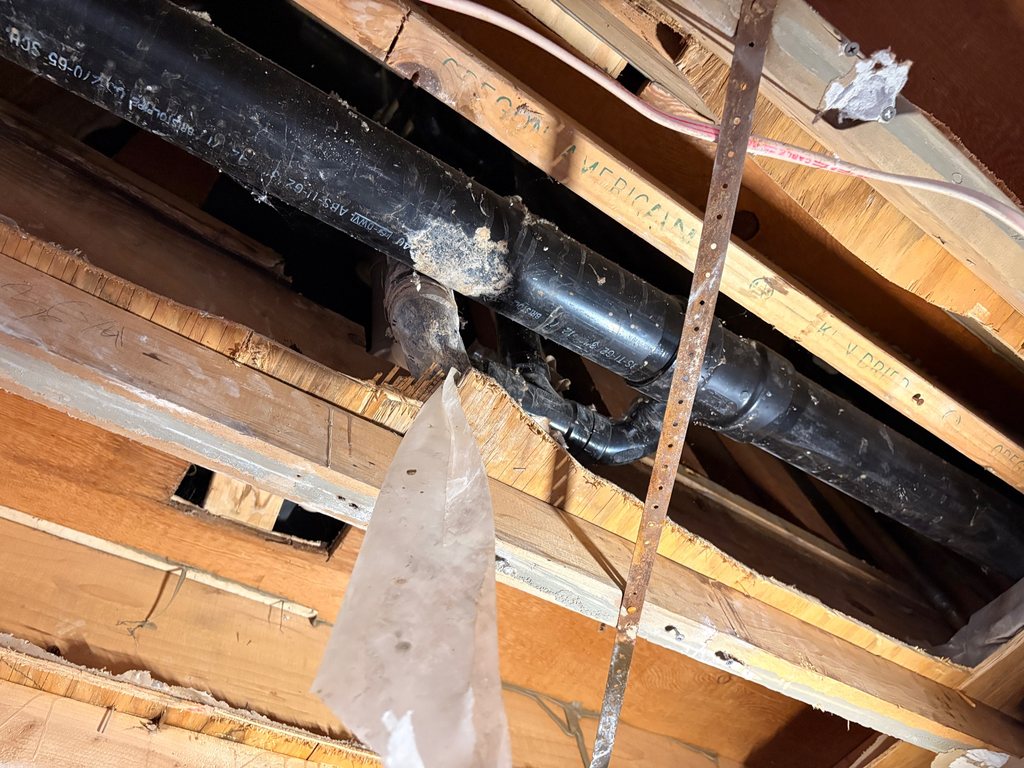
An offset flange can move the toilet over by an inch or two without touching the pipe. Moving it farther means opening the floor, or the ceiling under it, to move the drain itself, and that drain has to keep its slope and its vent. On a basement slab it means cutting concrete. That’s a remodel job, not a swap. While the toilet is off, check the flange height too: a flange that sits under the new tile is the most common reason for a toilet leaking at the base, and a broken one is behind most wobbly toilets.
The other measurements
- Side to side: at least 15 inches from the center of the toilet to a wall or vanity.
- In front: at least 21 inches clear in front of the bowl.
- The supply valve: where it comes out of the wall. A one piece or skirted toilet can cover it or sit against it, and an old valve is worth replacing while the toilet is off, as the toilet shut off valve explains.
- Seat height, if you’re also thinking about a comfort height toilet.
Before you buy
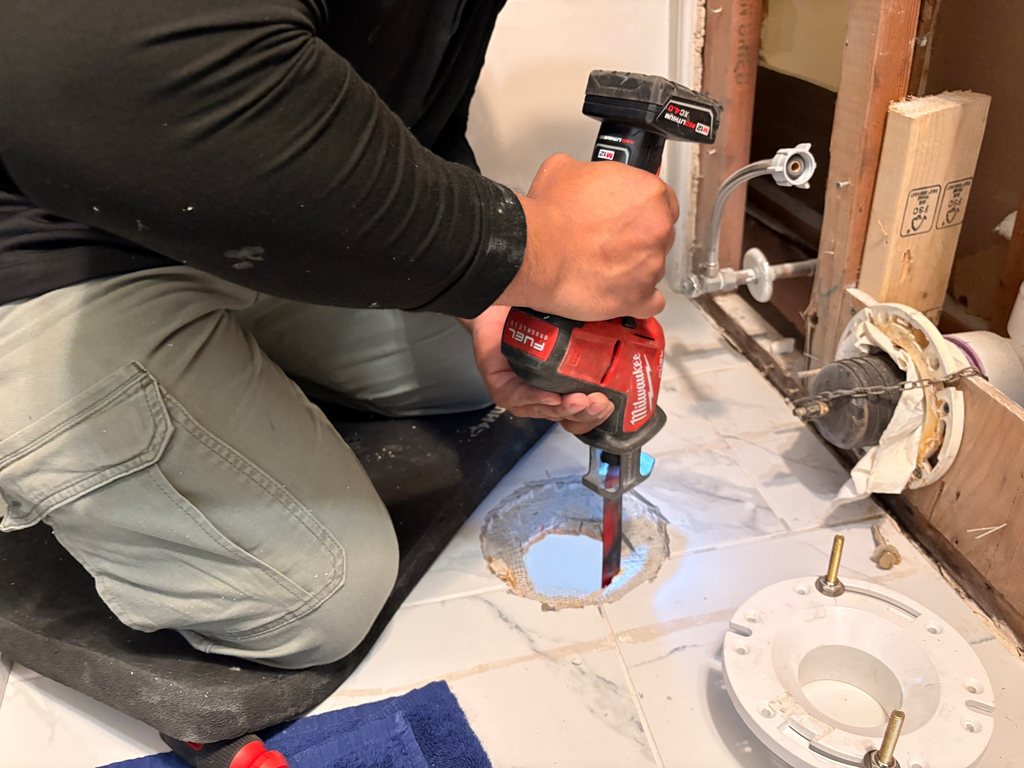
Write the rough-in down, take a photo of the toilet with the tape measure in it, and take the model number from inside the tank. That covers almost everything a store will ask. Toilet replacement cost breaks down what changes the price of putting it in.
Measuring before you buy saves a return trip. Knowing the warning signs saves more. Every warning sign around the house, from a furnace’s blinking light to the sounds a house makes, is in one guide.
Fix it or replace it
Most toilets don’t need replacing. A flapper, a fill valve, a wax ring or a loose tank is a repair, and almost everything we find wrong with a toilet is repairable. A new one makes sense when the porcelain is cracked, it uses 3.5 gallons or more a flush, the parts aren’t made anymore, or the height or shape just doesn’t fit the people using it.
What it costs when we do it
A new toilet installed runs $800 to $1,300, and we check the flange, the shutoff valve and the supply line when we set it, because a new toilet on an old flange is the next leak. This month’s coupons on our offers page take $100 off a new toilet, or $50 off any plumbing repair over $400. If the toilet you have just needs a part, toilet repair runs $250 to $900, priced in writing before we start. Any plumbing repair also comes with a whole-house plumbing inspection, a $149 value. A plumbing diagnosis visit is $49, or $250 after hours.
Call (703) 997-9757, day or night, or book a toilet repair online. Rated 5.0 stars across 1,138 reviews on Google, Angi, Yelp, the BBB and Facebook, Virginia Class A license 2705192276.
Questions people ask
How do I measure a toilet rough-in?
Measure from the finished wall, not the baseboard, to the center of the bolts that hold the toilet to the floor. Round to 10, 12 or 14 inches.
What is the standard toilet rough-in?
12 inches. Some older homes, condos and small bathrooms are 10 or 14.
Can I put a 12 inch rough-in toilet on a 10 inch drain?
No. The tank hits the wall before the toilet lines up with the drain. Buy a 10 inch toilet, or move the drain.
Can I put a 10 inch rough-in toilet on a 12 inch drain?
Yes. It fits, with about a 2 inch gap behind the tank.
How much does it cost to replace a toilet?
When we do it, a new toilet installed runs $800 to $1,300, and we check the flange, the shutoff valve and the supply line when we set it.