


The short answer
A programmable thermostat in a Northern Virginia home saves money only if it actually runs a schedule. The Department of Energy says turning the heat back 7 to 10 degrees for 8 hours a day can save as much as 10 percent a year on heating and cooling. But research found about half of programmable thermostats weren’t used the way they were designed, and ENERGY STAR stopped labeling them at the end of 2009.
The part most people don’t know
ENERGY STAR’s programmable thermostat page says the label was suspended on December 31, 2009. In a February 2010 letter, EPA said it recognized that programmable thermostats could save a lot of energy, but there were still questions about the net savings. The thermostat could do the job. The question was whether it did, in real homes.
The $67 Heating Check
We check your furnace, heat pump or boiler before winter. Through December 31. See the offer
What the research found
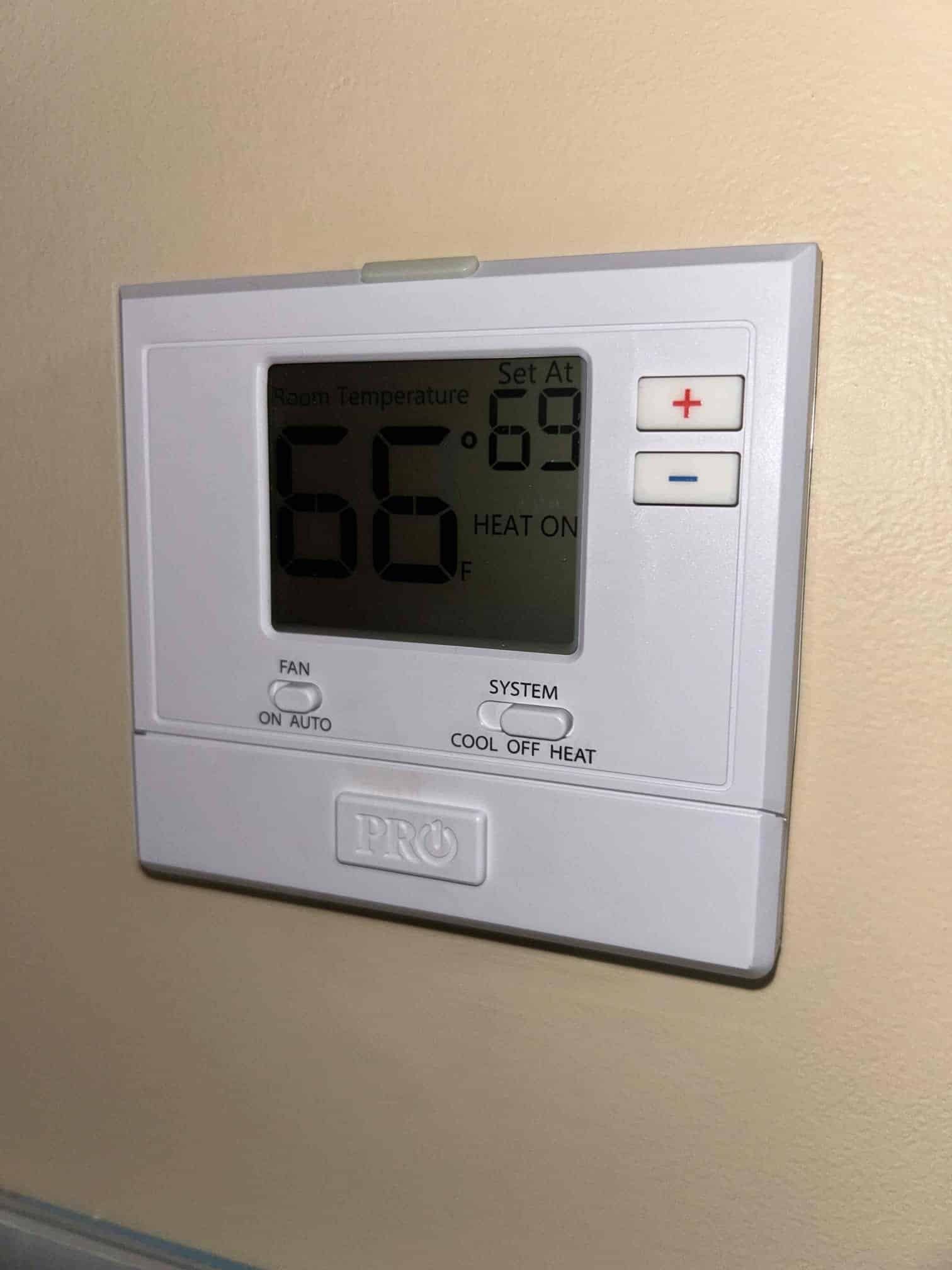
Researchers at Lawrence Berkeley National Laboratory looked at how people actually use them in 2010. In an online survey of 81 people, 89 percent rarely or never set a weekday or weekend program. In photos of thermostats in 20 low-income homes in Wisconsin, only 30 percent were programmed. In one thermostat maker’s data on 35,471 thermostats, 47 percent were in program mode and 53 percent were on hold. The researchers said none of those studies was representative of every home, but they concluded about half of programmable thermostats weren’t used as designed. Many people used them as an on-off switch.
Turning it down does save
DOE’s home upgrades guide still says you can save as much as 10 percent a year on heating and cooling by turning the thermostat back 7 to 10 degrees for 8 hours a day. Its older thermostat guide adds that the savings are bigger in milder climates, and calls it a misconception that the furnace works harder to warm the house back up. A colder house loses heat to the outside more slowly, so the longer it stays set back, the more you save. ENERGY STAR’s smart thermostat FAQ puts the average saving from a smart thermostat at about 8 percent of heating and cooling bills.

The heat pump catch
A heat pump is different. DOE’s 2022 Energy Saver guide says don’t set a heat pump back without a smart or programmable thermostat designed for heat pumps. Our read: on a big setback, the catch-up in the morning often brings on the backup heat strips, and those cost more to run. Here’s aux heat vs emergency heat, how a heat pump handles a Virginia winter and why a heat pump runs all the time.
What you can check yourself
- Look for Hold. If the screen says Hold or Permanent Hold, no schedule is running. The thermostat keeps one number until someone changes it.
- Check the schedule. Open the menu and look at the weekday and weekend times. Factory times may not match when you’re actually home or asleep.
- Check the clock. A clock set wrong runs the whole schedule at the wrong hours.
- Know your system. Heat pump? Make sure the thermostat is set up for one before you try big setbacks. Here’s the best thermostat setting for winter.
- The fan setting. ON runs the blower all the time; AUTO runs it only with the heat. Here’s fan on or auto.

What we check
If the schedule’s right and the house still won’t hold temperature, the thermostat may not be the problem. Here’s why a thermostat stops working.
Our heating check is $67 per system, through December 31: furnace, heat pump or boiler. On a furnace, for $229 we also pull the blower wheel and clean it blade by blade, fit a new filter, set your dampers for winter and tune the furnace.
Water heater flashing a code or a blinking light? Our error codes and warning lights guide covers what each one means.
Book it
Book the heating check, call (703) 997-9757, or book online from goswiftpro.com/cookiesoffer and a box of warm cookies comes with the visit. Rated 5.0 stars across 1,138 reviews on Google, Angi, Yelp, the BBB and Facebook, Virginia Class A license 2705192276.
Questions people ask
Do programmable thermostats really save money?
Only when they run a schedule. DOE says a 7 to 10 degree setback for 8 hours a day can save as much as 10 percent a year on heating and cooling, but research found about half weren’t used as designed.
Why did ENERGY STAR stop labeling programmable thermostats?
ENERGY STAR suspended the label on December 31, 2009. EPA said there were still questions about the net energy savings in real homes.
Does a furnace work harder to heat the house back up?
No. DOE calls that a misconception: a colder house loses heat more slowly, so the longer it stays set back, the more you save.
Should I set back a heat pump at night?
Only with a smart or programmable thermostat designed for heat pumps, DOE says. A big setback can make it lean on backup heat on the way back up.


