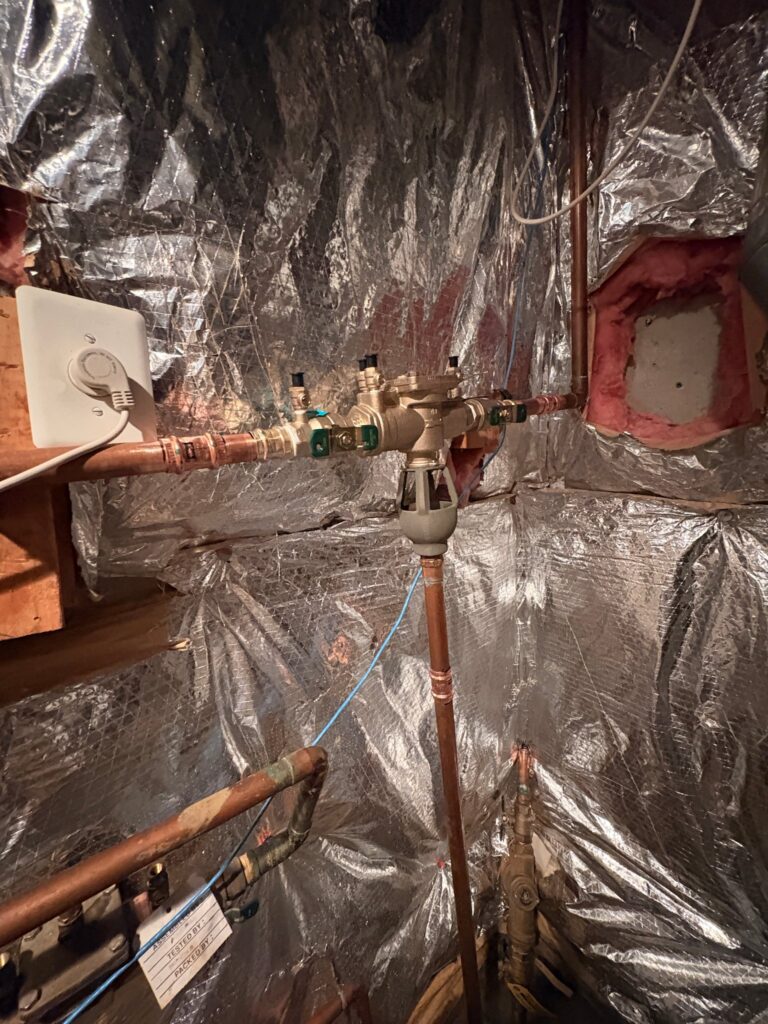
Half the owner homes in 20105 were built in 2013 or later, and more than nine in ten of all its homes since 2000. In a ZIP that young, the first test on a lot of these devices wasn’t the owner’s to arrange. Loudoun Water puts testing on the owner, but says that on a new house it’s typically the contractor who handles it. That covers the test when the device went in. Every yearly test after it is the owner’s to book.
Which water you’re on decides whether any of this applies. Stone Ridge’s association lists Loudoun Water, and its rules are the ones printed on this page. The old village strung along Route 50 is the exception: Loudoun’s 2019 General Plan says it’s the only rural village in the county served by a private water company, so a backflow question there goes to that company, not to Loudoun Water.
If your irrigation company takes the PVB off before the first freeze, Loudoun Water wants it tested again once it’s back on, so line the test up with the spring start-up rather than waiting on a letter. And if you’re through with the sprinklers, letting the test lapse isn’t the way out. Loudoun Water’s way out is a cut and permanent cap on the system’s supply, and the work has to be done by a plumber or a certified irrigation contractor. That ends the yearly test for good.
Stone Ridge is more than half townhouses, and its association lists six condo communities, Amber Springs, Centre Park, Mercer Park, Stone Mill Corner, Stone Springs and Summerwalk, each run by its own management company. A building’s fire line device is usually the association’s to test, so a notice covering the whole building belongs with that manager. Loudoun County backflow testing covers the rest of how Loudoun Water’s program works.