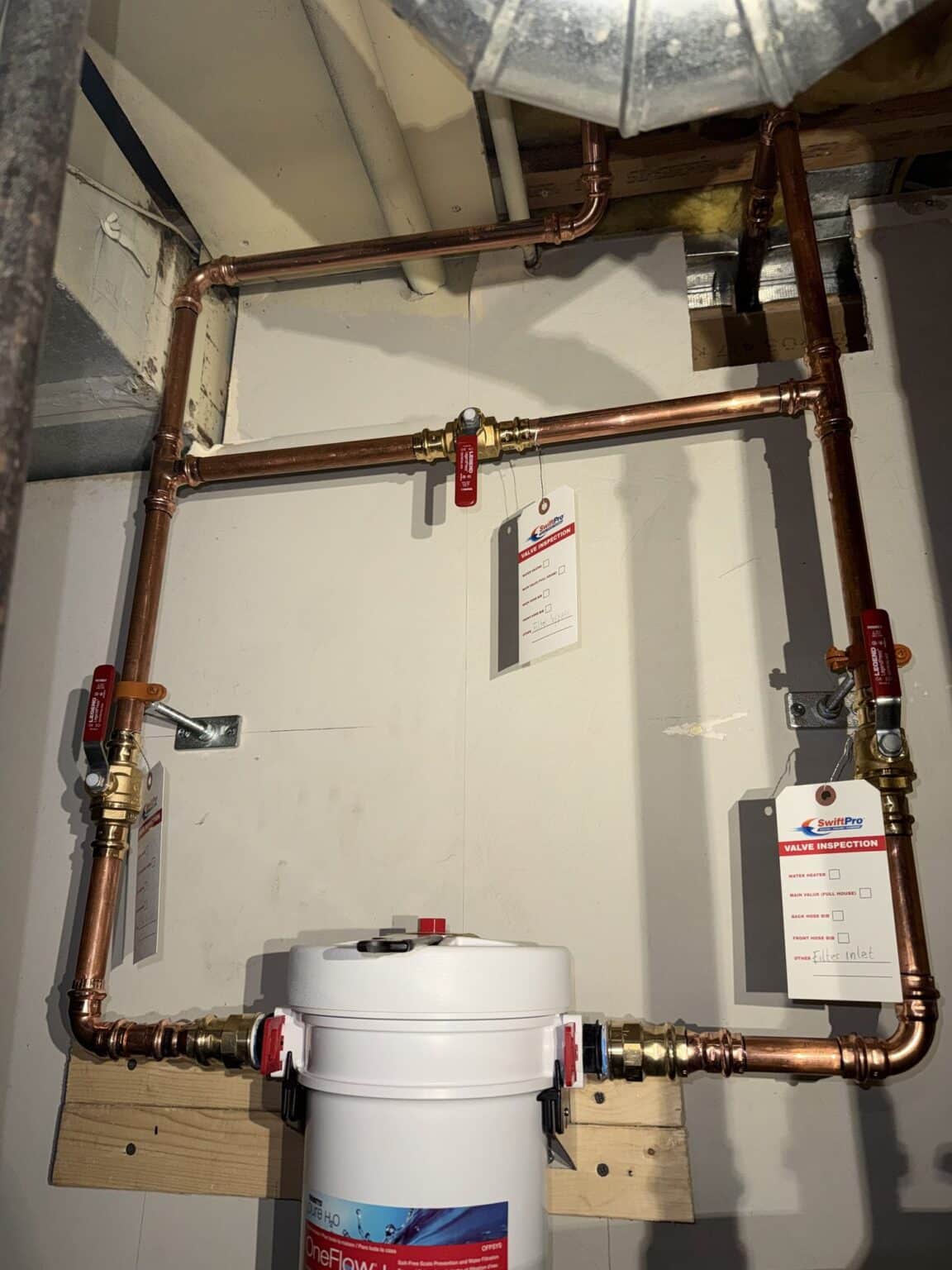
About two thirds of Bristow’s land sits in the Census Bureau’s Linton Hall place, where three in four homes went up since 2000 and nearly nine in ten owner homes heat with gas. That’s subdivision country, Victory Lakes and Braemar among it. The other third of 20136 sits in no Census place, and it takes in Brentsville, the county seat from 1820 to 1893. No public record we’ve found says which Bristow addresses are on wells, so we won’t guess at a number. If there’s a pressure tank in your basement, this page is for you.
Prince William Water doesn’t make anyone hook up. An owner in an unserved part of the county who wants public water pays to run the line from the nearest main, plus availability fees. So a well on an older Bristow lot can stay a well for good, even with a subdivision’s mains a field away. That makes the pump, the tank and the switch worth keeping in shape rather than waiting on a hookup that won’t come cheap.
You’d have plenty of company. The County’s Sustainability Commission counts about 50,000 people in western and mid Prince William drinking from roughly 16,000 private wells, its 2026 figure. Every one of those has its own pump and its own tank, and none is on anybody’s maintenance schedule but the owner’s. On a well, a slow pressure loss or a pump that runs longer than it used to is the early warning; nobody else is watching for it.
Prince William Water’s own lab will test a private well’s water for a fee, even if you’ve never been its customer. After we’ve had the pump out, Virginia Cooperative Extension says to shock chlorinate the well and retest for bacteria one to two weeks later, so that’s the sample to send. If the test or the pump says the well itself is failing, that’s work for a drilling rig, and we’ll tell you who to call.