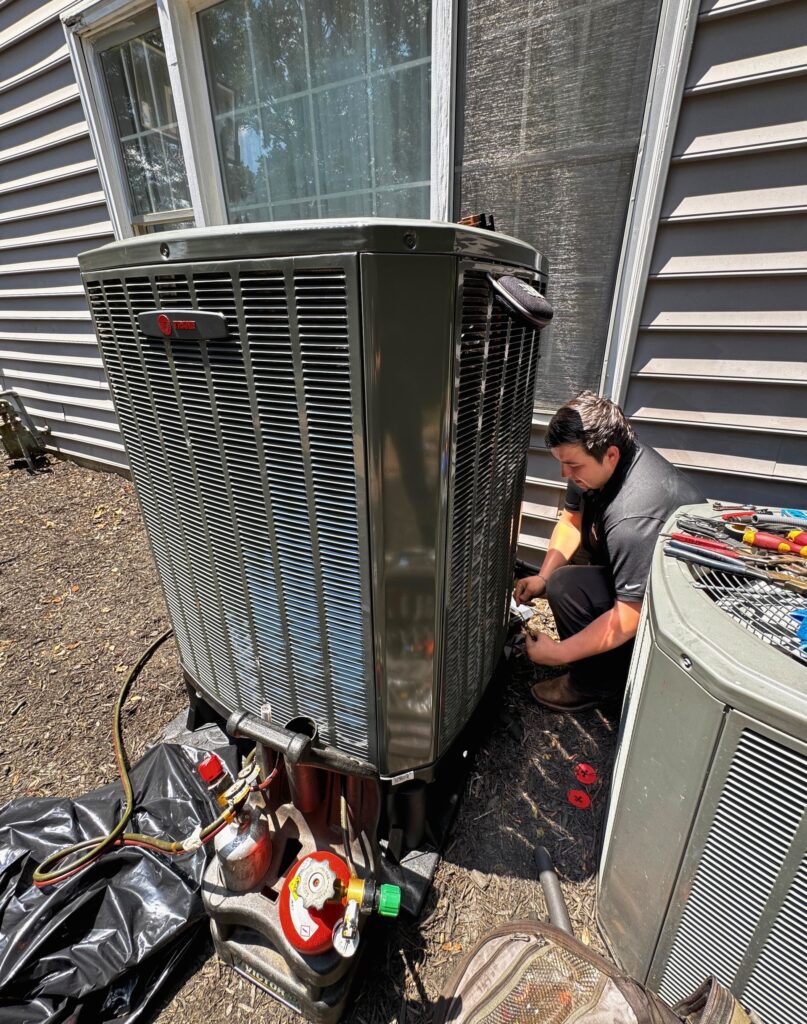
Electricity heats 1,695 of the 3,076 owner homes in 20181, and out here that mostly means a heat pump, one outdoor unit for summer and winter, so its replacement belongs on the heat pump page. The AC-only houses are the fuel-burning ones: 597 on propane and 459 on gas, a furnace inside with a separate condenser outside. If the condenser wears out before the furnace, only the outdoor unit and the coil above the furnace get replaced.
Nokesville built in two waves, and its condensers sort the same way. The 1970s and 80s added 1,238 homes, now on their second air conditioner or later. The 2000s added 904 more, many still cooling with the builder’s condenser, between 17 and 26 years in, and one installed before 2010 most likely runs R-22. The 401 homes finished since 2010 came with R-410A or newer, still serviced, so a breakdown there gets a repair price before anybody quotes a replacement.
The village is older. In the Census place around Aden Road the median owner home dates to 1970, and close to four in ten homes went up before 1960, when central air wasn’t standard. There the cooling came later, through ductwork added in an attic or crawlspace or squeezed onto the old heating ducts. Before a new AC goes on, the tech checks whether those ducts and the return can carry the air a new coil needs.
Prince William County’s guidelines for replacing mechanical equipment without plan review want the new unit on the same fuel, at the same capacity, in the same spot. Size the new AC to the rooms and it may not match the old capacity, so ask how that changes the paperwork before you sign. On a big lot the old pad is usually still the right place, and there’s no town office in Nokesville layered on top of the county’s.