In 22101 about 77 percent of owner homes heat with gas, and 38.8 percent of all its homes went up between 1950 and 1969. A house like that has been through two or three air conditioners already. What it usually hasn’t replaced is the ductwork, laid out for the first system, back before the family room or the finished basement was added. So a new AC on the furnace here gets sized from the house and its return. An oversized condenser on a 1960s return runs short, loud cycles and leaves the rooms feeling clammy.
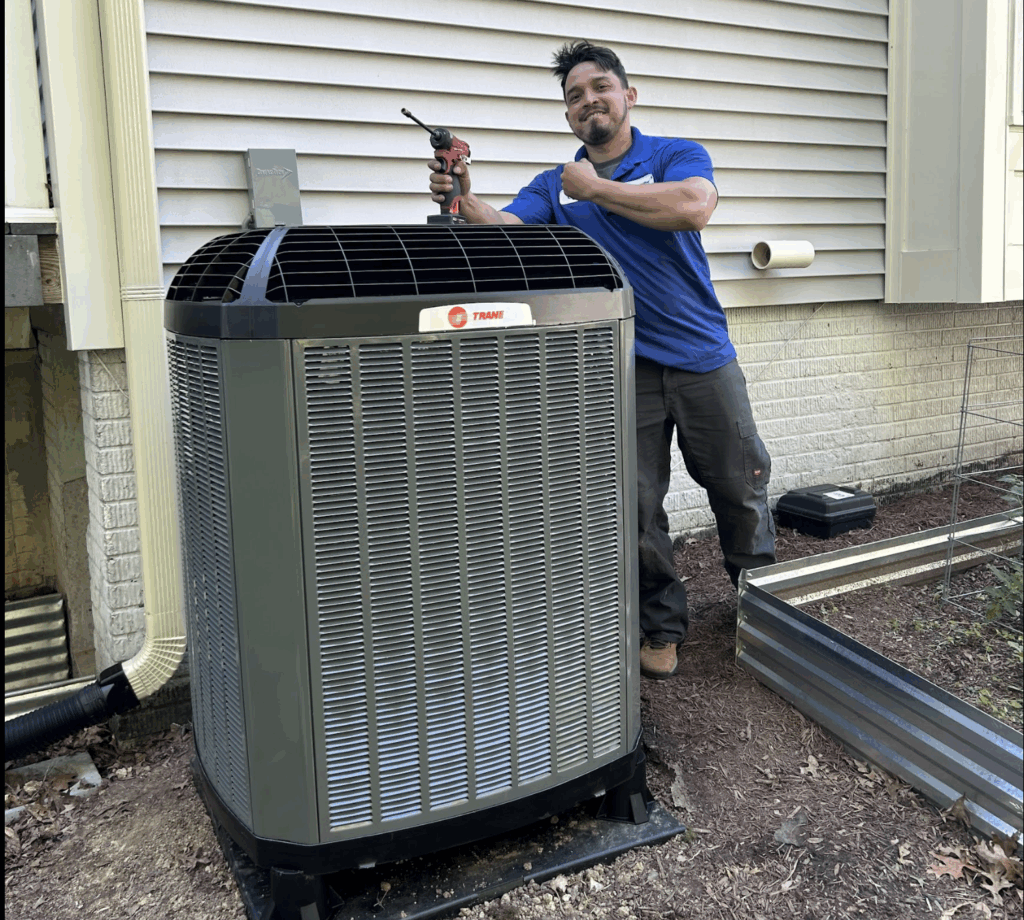
Read the label on the condenser before deciding anything. A unit put in before 2010 most likely holds R-22, and with that refrigerant out of production since 2020, each leak repair on one draws on a dwindling supply. An R-410A unit can still be serviced, and if it’s young, a repair may be the better money. About 15 percent of 22101’s homes went up in 2010 or later, some where an older house came down, and those are still on their first systems, often one big unit split into zones with a thermostat on each floor.
Boiler houses are McLean’s own case. McLean is where we see boilers most. Hot-water heat is a regular part of our McLean heating work, far more than anywhere else we go. In those houses no furnace blower waits for a cooling coil, so the central air came with an air handler of its own, usually in the attic above the bedrooms. Replacing that AC means the outdoor unit plus the coil in the attic air handler, or the whole air handler if it’s worn, and the boiler stays as it is. The quote should say which, and where the drain runs.
22102 is a different McLean. It takes in most of Tysons, and 46.2 percent of its homes sit in buildings of 50 units or more. Electricity heats 44.6 percent of its owner homes, which in a tower usually means a closet heat pump, replaced as a heat pump rather than an AC, and some towers run closet units off the building’s water loop, so management comes first. The 22102 houses and townhouses on gas, about half the owner homes, are where an AC-only swap fits. Fairfax County permits either job as mechanical work, with an A2L certification for the newer refrigerants.