The Town of Clifton covers about one percent of 20124’s land, and the rest is Fairfax County, where the median owner’s house dates from 1988 and nearly eight in ten went up between 1980 and 1999. The houses run big: six in ten homes in the ZIP have nine rooms or more, and a house that size often cools with two systems, one for the main floors and basement and one in the attic for the bedrooms. Each is its own air conditioner, with its own condenser, coil and age, so replacing the one that failed doesn’t commit you to the other.
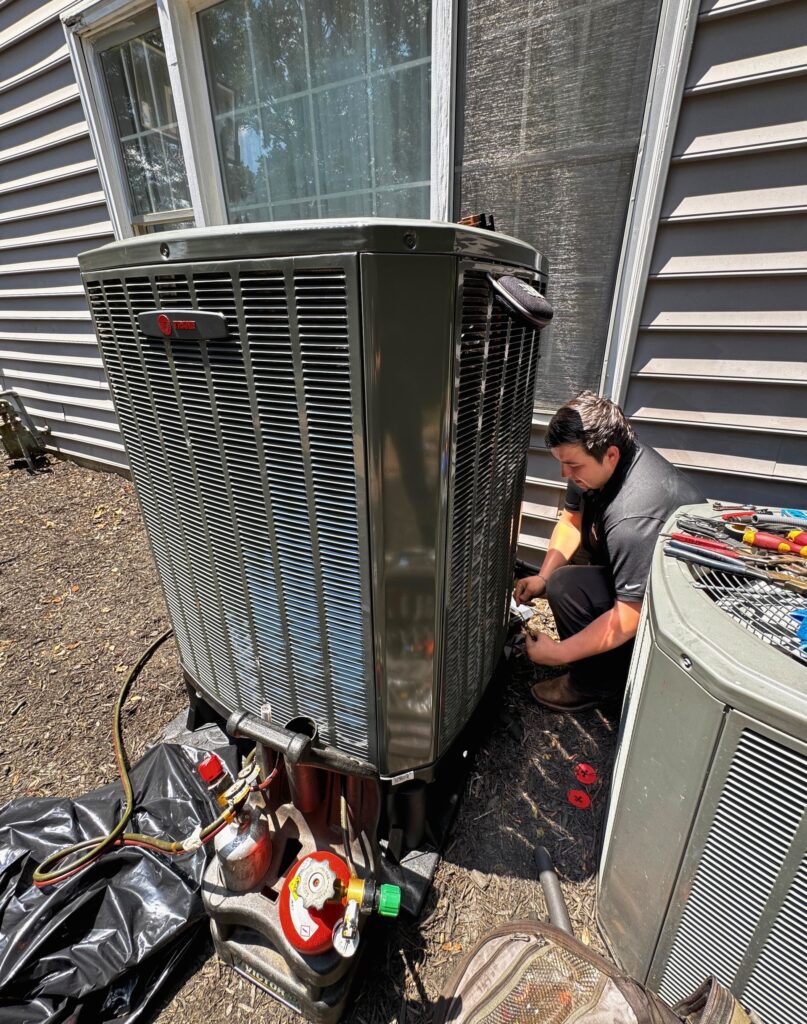
A builder’s AC from the late 1980s is long gone, so the condenser out back is usually the second, sometimes the third. If it went in during the 2000s it most likely holds R-22, out of production since 2020, and that’s the one to plan for before its next leak. Gas heats about six in ten owner homes on the county side, the share highest in the 1980s subdivisions off Springstone Drive and Union Mill Road, and there the new coil goes on top of the furnace in the basement. A propane furnace takes a new AC the same way.
Inside the Town of Clifton the order of sign-offs matters. The Town doesn’t issue permits, but it signs off first, by letter, and Fairfax County won’t move the mechanical permit until that letter is uploaded to the county record. The county then wants its A2L certification for the new system, because today’s air conditioners are charged with one of those refrigerants. The whole town is the Clifton Historic District, so a condenser going into a new spot changes the outside of the building, and that takes a certificate of appropriateness from the Architectural Review Board.
The Town’s houses are almost all over 120 years old, so central air came long after them and went wherever it fit, with the air handler often in an attic or a crawlspace. A replacement there starts with the ducts and the drain, not the condenser. Out on the acreage along Clifton, Compton and Yates Ford Roads, a house with a standby generator needs one more look: the generator was sized for the AC the house had when it went in, and a new compressor starts differently, so its capacity gets checked before the old unit leaves.