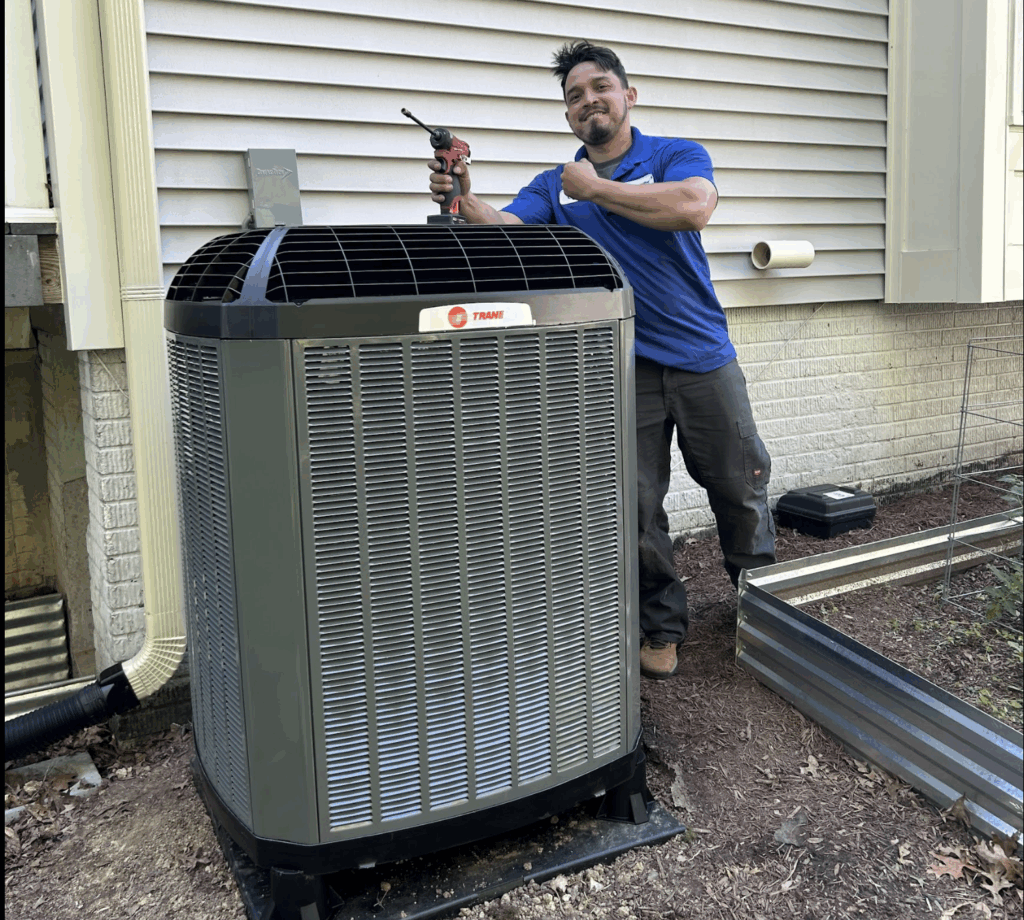
Gas heats about eight in ten owner homes in the Gainesville CDP, which puts a furnace inside and a central air conditioner outside, and a worn-out outdoor unit can go by itself. Plenty of 2000s houses here carry two of those setups, one for the main floor and basement, one for the bedrooms. Read the label on each outdoor unit first: builders often put a heat pump on the upstairs system, and from the yard the two look nearly alike.
The build year sets the refrigerant. In the CDP, 2,087 of the 4,951 owner homes went up from 2000 through 2009, and a builder condenser from those years most likely holds R-22; at about twenty, that’s the unit this page is usually about. Another 1,480 date from the 2010s and 428 from 2020 on, most likely on R-410A, which is still serviced. On those, a failure is usually a repair, and the youngest may still be inside the maker’s parts warranty.
Virginia Oaks dates to 1994, so its 561 houses are past the age of a first air conditioner, and its design guidelines make the replacement easy: a new exterior air conditioner where the old one stood needs no DRC application. A new spot is different, since adding or changing a structure on the lot needs an approved Exterior Changes Application first. Heritage Hunt, built after its 1997 zoning, sits outside the Census figures above.
About a third of Gainesville homes are townhouses, and in a 2000s row the condenser usually sits on a small pad out back or under the deck. Prince William County lists a condensing unit traded for the same type, where the old one stood, as needing no permit. If the furnace under your coil is the same 2000s vintage, have the pair priced at $8,898 to $23,000 too; a furnace replaced in recent years makes the AC alone the job.